Conservation Research Projects
If you have comments or information relating to our research projects, please contact us.
A 14th Century Catalan Triptych (37.468)
Art historical, scientific, and technical research contribute to the careful treatment of this very rare and significant Spanish altarpiece, attributed to a Catalan master. The large Gothic triptych titled The Madonna and Child with the Crucifixion, the Annunciation, the Presentation in the Temple, and the Coronation of the Virgin is a striking example of Italian influence in Spain. (Carmen Albendea, Jennifer Giaccai)
- Online presentation about the Catalan altarpiece created by the Walters
The Walters’ Ancient Egyptian and Near Eastern Scarabs Project
The Walters Art Museum houses an outstanding collection of some 150 ancient Egyptian and Near Eastern scarabs, most of which have been unrearched and unpublished. The scarab – a representation of the dung beetle (Scarabaeus sacer) – was by far the most important amulet in ancient Egypt. The insect, which lays its eggs in a ball of dung, was associated with the sun god, represented as a beetle rolling the solar disc through the heavens with its front legs. Scarab amulets were used as seals, royal gifts, or commemorative objects for both the living and the deceased.
The main goal of the first phase of the Walters’ Ancient Egyptian and Near Eastern Scarabs Project has been to distinguish modern imitations or forgeries. The second phase comprises research into the origin of specific pieces, dating the objects as specifically as possible, determining the functions of each of the scarabs, and defining the significance of these amulets. A publication of the museum's collection of Egyptian and Near Eastern scarabs is planned for 2006.
George Inness and The Search for The New Jerusalem
While researching the museum’s Valley of the Olive Trees (37.112) by George Inness for possible conservation treatment, the art historian Michael Quick proposed that the Walters' picture was a fragment of a large, very important painting lost in an accident at Madison Square Garden in 1880. The museum brought together three paintings from different collections and through technical examination, determined that the lost New Jerusalem was salvaged from the rubble, cut into three canvases, reworked by Inness, and sold as separate works.
- Video: Search for the Lost Jerusalem (Eric Gordon)
Examination and treatment of St. Sebastian Succoured by Holy Women by J.B. Corot (37.192)
A technical study and treatment were carried out on the painting, revealing how Corot reworked this massive canvas over three decades.
- Published: “An investigation into the painting technique of the two versions of St. Sebastian succoured by Holy Women,” in Barbizon, Malerei der Natur - Natur der Malerei , A. Burmester, C. Heilmann, M., editors, Zimmermann, Munich (1999). (Elyse Klein)
Scipio Africanus Freeing Massiva by G.B. Tiepolo
After water damage, a large, early Tiepolo (37.657) painted on fabric, with previous condition problems, received a major treatment and curatorial re-evaluation.
- Video: 1994-5 "A Treasure Restored" a Maryland Public Television short documentary on the conservation of a G.B.Tiepolo painting.
- Video: 1996 "The Restoration of a Masterpiece" a Maryland Public Television 1/2 hour documentary on the research into and conservation treatment of a G.B.Tiepolo painting.
- Published: "A local treatment for setting down severely tented, water-damaged paint on a transferred and lined painting by Giovanni Battista Tiepolo," Proceedings from the AIC Annual Meeting, 1998. (Eric Gordon, Peter Nelsen and Catherine Rogers)
Bartolomeo Esteban Murillo’s The Immaculate Conception (37.286)
The examination, technical study, and treatment carried out on this major work led to discoveries of the artist’s and his large studio’s painting techniques. (Gwen Fife)
Michele Coltellini’s Madonna and Child with Saints (37.880)
This large panel, signed and dated 1506, had been in storage for over a century due to its condition. An extensive two year conservation treatment and art historical research uncovered a nineteenth century addition at the top of a rare and exquisitely preserved sixteenth century Ferrarese altarpiece.
- Upcoming publication: “Michele Coltellini’s Virgin and Child with Saints: The Re-emergence of a Rare Ferrarese Altarpiece,” The Journal of the Walters Art Museum(Gillian Cook)
Neri di Bicci’s Coronation of the Virgin (37.675)
In this two and a half year treatment and research project, a large and unusual Florentine panel painting, c.1475, underwent both structural and surface conservation. Scientific and art historical research on paintings by Neri di Bicci, his father, and grandfather in the museum’s collection illuminated the practices and progression of early Renaissance painting techniques.
- Published: “Three generations of Florentine workshop: a comparative study of the materials and techniques of Lorenzo di Bicci, Bicci di Lorenzo and Neri di Bicci,” 13th Triennial Meeting Rio de Janeiro Preprints, 22-27 September 2002. James and James, London (Gillian Cook)
Giovanni di Paolo’s Frosini Altarpiece (37.554)
An extensive examination and treatment carried out on this large, complete, altarpiece, Madonna and Child with Saints (37.554), (ca. 1470) contributed to reassessing the significance of this Sienese masterpiece. Technical analysis on di Paolo’s paintings in the Walters and elsewhere revealed insights into the development of the artist’s painting methods.
- Published: “Stylistic, Technical and Material Developments in the Paintings of Giovanni di Paolo, Preprints: Painting Techniques: History, Materials and Studio Practices, International Institute for Conservation (IIC) 17th International Congress, Dublin, Ireland (Eric Gordon, Karen French, Elyse Klein)
The Passion of Christ, A fifthteenth century German altarpiece
Examination and treatment of eight large panel paintings (37.663-64, 37.667-71 and 37.674) led to discoveries into the making of a Gothic altarpiece. Treatment at the museum spanned seven decades, chronicling the changing philosophies of painting conservation in the twentieth century.
- Published: “The Painting Technique and Treatment History of Eight Late Fifteenth Century German Panels Representing the Passion of Christ in the Collection of the Walters Art Museum,” The Journal of the Walters Art Museum, vol. 59, 2001 (Karen French and Eric Gordon)
- Published: “The Restoration History of a Late Fifteenth Century German Altarpiece and How it Reflects Philosophical Trends in Conservation,” Preprints ICCOM Conference, Rio de Janeiro, Sept. 2002James and James, London, (Eric Gordon).
The Ideal City (37.677)
Research is underway on the technical examination of this landmark painting. (Eric Gordon, Jennifer Giaccai)
Archimedes Palimpsest
Conservation treatment work as well as imaging and analytical studies are currently underway on the Archimedes manuscript. The work involves disbinding the manuscript and preparing it for imaging using a variety of digital and x-ray based scanning systems. Challenges to the work of recouping the manuscript include previous physical damage to the parchment, the addition of a second text (known as a palimpsest) over the original writing, and the fragile nature of the leaves. (Abigail Quandt)
- For further information, see the Archimedes website www.archimedespalimpsest.org.
The subject of this website is a manuscript of unique importance to the history of science, the Archimedes Palimpsest. This tenth century manuscript is the unique source for two of Archimedes Treatises, The Method and Stomachion, and it is the unique source for the Greek text of On Floating Bodies. Discovered in 1906 by J.L. Heiberg, it plays a prominent role in his 1910-15 edition of the works of Archimedes, upon which all subsequent work on Archimedes has been based. The manuscript was in private hands throughout much of the twentieth century, and was sold at auction to a private collector on the 29th October 1998. The owner deposited the manuscript at The Walters Art Museum in Baltimore, Maryland, a few months later. Since that date the manuscript has been the subject of conservation, imaging and scholarship. The Archimedes Palimpsest project, as it is called, has generated a great deal of public curiosity, as well as the interest of scholars throughout the world. (William Noel)
French Drawings
In association with a traveling exhibition, “The Essence of Line,” a conservation survey was done of the 19th-century French drawings in the Walters' collection. Information such as type of paper, presence of watermarks, inscriptions, and previous exhibition histories was collected for almost 500 drawings. A Walters publication, The Essence of Line, is the catalogue for the exhibit. A website, www.frenchdrawings.com enables the viewer to access the collected information. The conservation survey was funded with the support of the National Endowment for the Arts. (Elissa O’Loughlin)
Thai Bronzes
During the 1990's, the objects conservation staff spearheaded a research project involving technical studies of bronze sculptures from Thailand. Staff members at the Walters contributed to the study, commissioning outside tests (such as the thermoluminescence testing of the clay cores and metal composition analyses) and studies by conservation scientists outside the museum (concerning, for instance, the classification of the sculptures according to the mineralogical and cultural attributes of the clay cores). The new data made it possible for the curator of Asian art to write a history of the sculpture of Thailand that recognized the significance of workshop practices and put the study of the art of Thailand on a sounder basis than had hitherto been possible.
- Published: The Sacred Sculpture of Thailand: the Alexander B. Griswold Collection, the Walters Art Gallery, Baltimore, 1997 (Hiram W. Woodward, Jr., with contributions by Donna K. Strahan; Terry Drayman-Weisser; Julie A. Lauffenburger; Chandra L. Reedy, University of Delaware; and Richard Newman, Museum of Fine Arts, Boston)
Renaissance Jewelry
An in-depth study of eight pieces in the Walters Renaissance jewelry collection has been completed and a study of the remaining pieces in the collection is underway. The analysis of the enamel on the jewelry has been carried out in collaboration with Mark Wypyski, The Metropolitan Museum of Art. Analysis of the gold is planned for all pieces in the Renaissance jewelry collection. (Terry Drayman-Weisser)
- Upcoming publication: “Fabulous, Fantasy or Fake?: An Examination of the Walters Renaissance Jewelry Collection,” (focusing on eight pieces in the study) will appear in the Journal of the Walters Art Museum (Terry Drayman-Weisser and Mark Wypyski, The Metropolitan Museum of Art)
Ivory
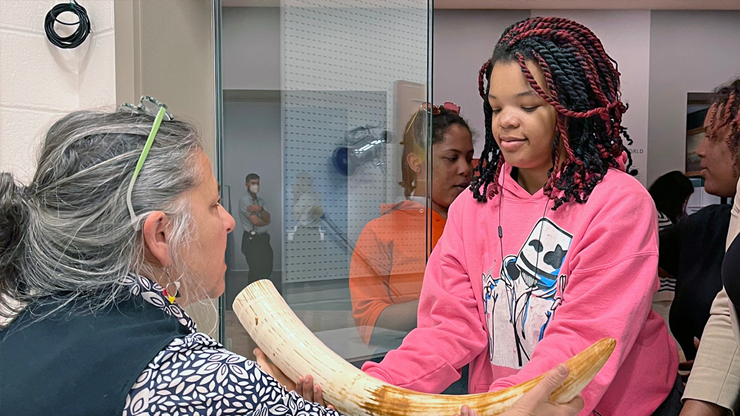
A study of ivory identification methods and preservation techniques is on-going. Methods for differentiating bone and antler when visual identification is insufficient is planned. (Terry Drayman-Weisser)
Renaissance Limoges Painted Enamels
A study of the Walters’ extensive collection of Renaissance painted Limoges enamels has been carried out, including history, method of manufacture, condition, and evaluation of previous treatments. Additional technical research is planned to determine individual workshop practices.
- Published: “The Early Painted Enamels of Limoges in the Walters Art Museum: Historical Context and Observations on Past Treatments,” The Journal of the American Institute for Conservation of Historic and Artistic Works, vol. 42, number 2, 2003; also another version in New research on Limoges painted enamels, Irmgard Müsch and Heike Stege editors, Braunschweig, 2004 (Terry Drayman-Weisser)
Byzantine Polychrome Tiles
A major project on the Byzantine polychrome tiles at the Walters Art Museum has been carried out. The collection is made up of exceptional examples of one of the rarest and least-known decorative media. Dating from circa 100 A.D. from the region of present day Istanbul, these glazed tiles were used to decorate niches within churches. Technical research carried out to discover the materials and methods of their production combined with extensive reconstruction from thousands of fragments places this collection on the world map.
- Published: A Lost Art Rediscovered: The Architectural Ceramics of Byzantium, Penn State Press and The Trustees of The Walters Art Museum 2001. (Julie Lauffenburger, co-editor and contributing author with Sharon Gerstel, University of California at Los Angeles
Salviati Glass
An investigation into the 19th century Venetian glassmaker’s recipes and techniques and how they relate to current conservation concerns is underway. Antonio Salviati and his firms played an important role in the 19th century revival of Venetian glass production including both vessel and mosaic objects. This research explores the technical innovations employed to make Salviati glass, sometimes copies of ancient through Renaissance material, by examining glass compositions and the nature of surface effects used to imitate degradation. This information along with additional analysis will be used to better understand inherent deterioration currently seen on many of Salviati’s vessels in the Walters’ collection, as well as aid in preventative care and stabilization techniques. (Angela Elliott)
Renaissance Bronzes
Research and analysis in progress (Julie Lauffenburger)
Ethiopian Metalwork
Initial investigation underway. (Julie Lauffenburger)
Barye Bronzes
Research and analysis in progress (Julie Lauffenburger, Meg Craft, Terry Drayman-Weisser, Jennifer Giaccai)
Watches
A technical study of a mid 16th-century German watch is underway to review its authenticity. Analysis of the enamels and brass has been started. The changes made over time to a functional object and the making of replicas and forgeries of Renaissance clocks and watches has complicated the study. Study of other watches in the collection is anticipated. (Meg Craft)
Packing systems
The conditions in the cargo hold of an airplane are being studied and monitored using data loggers to improve safety for art objects during transportation for loan exhibitions. The goal is to determine the best packing system to reduce the severity of temperature fluctuations. (Meg Craft)
Corn Mummy
A Late Period Egyptian corn mummy is being studied and analyzed to determine the materials used in its construction. Many materials are present including: wax, resins, gum, wood, linen, pigments, gold foil, seeds and a clay-soil mixture. (Meg Craft, Jennifer Giaccai)
Egyptian bronzes
Initial examination is underway for a major technical study of Egyptian bronzes in the Walters collection.(Terry Drayman-Weisser, Regine Shulz, Jennifer Giaccai)
Velikii Ustiug (Russian) Enamels of the late17th-18th c.
Analysis and a technical study of this type of enamel in the Walters collection is underway. Preliminary analysis and SEM examination have been carried out indicating a more complex method of manufacture than previously thought.(Terry Drayman-Weisser)
Early Byzantine-style gold and enamel medallion
A filigree enameled gold medallion thought to be early Byzantine was re-examined due to iconographic and technical questions. Analysis of the enamel indicates that the object is likely 19th century.
- Published: “An Early Byzantine-style Gold Medallion Re-Considered,” The Journal of the Walters Art Gallery, vol. 49/50, 1991-92
Silver Cantharus
The authenticity of a silver cantharus in the Walters collection was questioned due to iconographic inconsistencies and previous restorations. Technical examination, X-radiography, XRF analysis, and an iconographic re-evaluation confirmed that the cantharus is indeed ancient.
- Published: “The Walters’ Silver Cantharus-A Technical Study,” Journal of the Walters Art Gallery, vol. 42, 1984-85 (Terry Drayman-Weisser)
Vierge Ouvrante de Boubon
The object had been condemned by several art historians as a modern fake. A review of the objects history, an examination of the object, and radiocarbon dating of the ivory suggest a Medieval date. (Terry Drayman-Weisser)
- Published: The Vindication of a Controversial Early Thirteenth Century Vierge Ouvrante in the Walters Art Gallery,” Journal of the Walters ArtGallery,vol. 55/56, 1997/1998 (Kelly Holbert)
Terracotta Joseph
A Renaissance ¾ life size terracotta figure of Joseph attributed to Civitale was pictured in 1914 with two figures now in the National Gallery of Art, Washington, that had been considered to be fakes.The association of the Walters’ Joseph with these questionable figures created doubts about Joseph’s authenticity.Thermoluminescence testing dated Joseph to the Renaissance, demonstrating the dangers of assuming “guilt by association. (examination and technical study by Terry Drayman-Weisser)
- Published: “A Terracotta Joseph Attributed to Civitale: Its Authenticity Vindicated,” The Journal of the Walters Art Gallery 48 (1990) (Joaneath Spicer)
Provenance Research
Provenance is the history of ownership of works of art. Provenance research contributes to our understanding of the historical, social, and economic contexts that ;inform the production, circulation, and preservation of an individual work of art. It can also shed light on the history of collecting and the formation of taste. This second aspect of provenance research is particularly meaningful for museums like the Walters that reflect the collecting interests of specific individuals. Documenting provenance can also serve as a means of authenticating a work of art and establishing legal ownership of it.
Provenance Research at the Walters Art Museum
Provenance research is a regular, ongoing part of curatorial work at the Walters Art Museum and is essential to documenting the museum's permanent collections. Provenance research is conducted by museum staff, fellows, and interns, and information generated by this work is continually added to individual object records. Although the museum seeks to verify and expand the provenance information associated with individual works of art in its collection, establishing a complete history of ownership can often prove challenging. The museum therefore encourages the sharing of information that might help to clarify the provenance of objects in its collection.
Nazi-Era Provenance Research
This era is defined as the period encompassing the Nazi Party’s rise to power and its defeat (1932-45). In recent years provenance research has assumed particular importance due to increased awareness of the extent of the cultural dislocation caused by the Second World War and the Holocaust. While many works of art confiscated or looted before and during the war were restored to their original owners or countries of origin, others were not and found their way onto the international art market. In recognition of this fact, many museums are researching their collections to determine whether works of art that have entered their collections since 1932 could have been seized or stolen and not subsequently returned.
Following the recommendations of the American Association of Museums (AAM), the Association of Art Museum Directors (AAMD), and the Presidential Advisory Commission on Holocaust-Era Assets, the Walters is actively investigating the Nazi-era provenance of the paintings, sculpture, and decorative arts in its collection. Priority has been given to works of art with unknown, incomplete, or otherwise suspect provenance for the period 1932-1945, particularly works of art in the museum’s collections that changed hands during ;that period ;and were, or could have been, in continental Europe. Beginning in 2004, the Walters began submitting records to the AAM-sponsored Nazi-Era Provenance Internet Portal (NEPIP). Works of art from the museum’s collections submitted to NEPIP can be found on the AAM portal, www.nepip.org.
The museum is actively researching the Nazi-era provenance of objects in its collection and will increasingly be transferring detailed provenance information from the museum’s object files to the electronic format of the website. This work is ongoing, will be updated periodically, and will continue to be cross-listed with the NEPIP. We welcome new information on works of art in the museum’s collection.