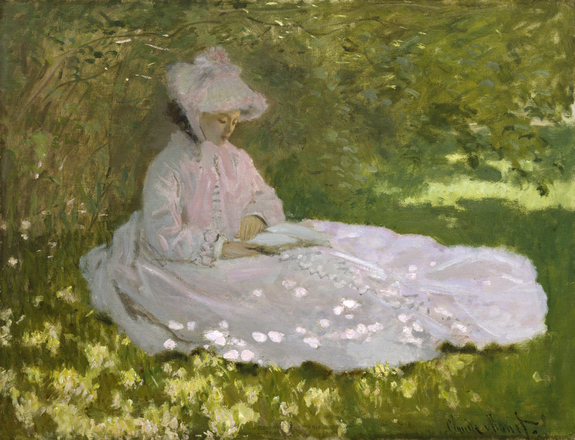
18th- & 19th-Century ArtBoth William T. Walters and his son, Henry Walters, preferred the highly finished works of the French academic masters of the second half of the 19th century. Henry Walters, however, endeavoring to assemble as comprehensive a collection as possible, acquired a number of key works by the Impressionists, those revolutionary artists who worked with discernible brushstrokes and a bright palette to achieve a remarkable effect of spontaneity. Highlights of the collection include Claude Monet’s Springtime, a portrait of his first wife, Camille, sitting under a lilac bush, Alfred Sisley’s panoramic view of the Seine Valley, The Terrace at St.-Germain, Spring, and Edouard Manet’s realist masterpiece, The Café Concert. Henry Walters was particularly interested in the courtly arts of 18th-century France. The museum’s collection of Sèvres porcelain includes a number of pieces that were made for members of the court at Versailles. No less significant are the portrait miniatures and the examples of goldsmiths' works, especially snuffboxes and watches. These are displayed in the Treasury along with some exceptional 19th- and early 20th-century works. Among them are examples of Art Nouveau jewelry by René Lalique, jeweled objects by the House of Fabergé, including two Russian imperial Easter eggs, and precious jewels by Tiffany and Co. The Walters’ collection presents an overview of 19th-century European art, particularly art from France. From the first half of the century come major paintings by Ingres, Géricault, and Delacroix. As a result of his stay in Paris with his family during the Civil War, William Walters developed a keen interest in contemporary European painting. He either commissioned directly from the artists or purchased at auctions major works by the Barbizon masters, including Millet and Rousseau, the academic masters Gérôme and Alma-Tadema, and the modernists Monet, Manet, and Sisley. Contact: |