About This Exhibition
This exhibition is made possible, in part, by the Gary Vikan Exhibition Fund,
The Hilde Voss Eliasberg Fund for Exhibitions, and support from Partners of
the Walters Art Museum.
Published Fall 2026
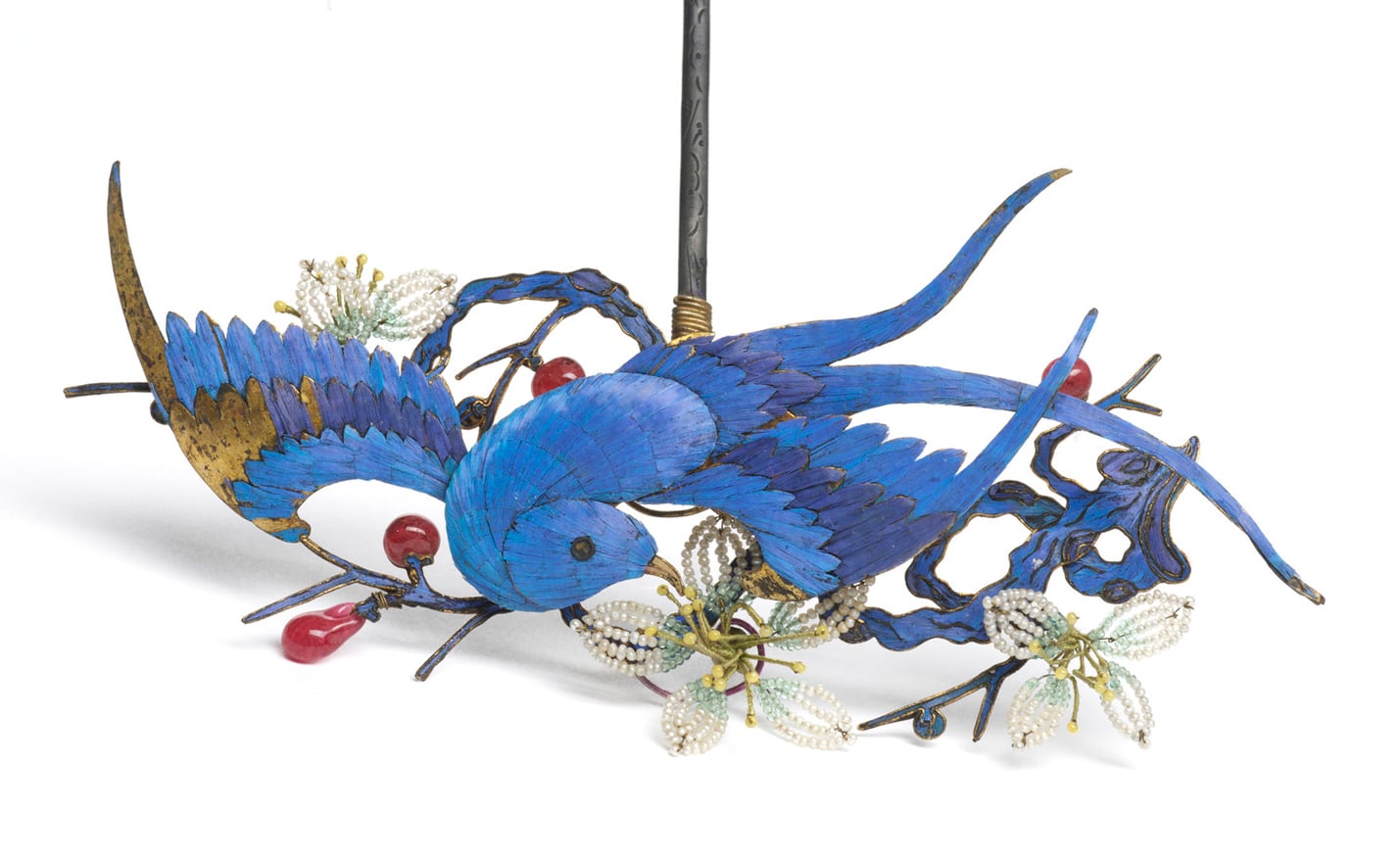
Hair Ornament in Form of Swallow, China, 19th century. Acquired by Henry Walters, 1907.
Luxury is defined as an indulgence in something sumptuous that provides pleasure, satisfaction, ease, or comfort. Today, the word luxury may conjure up images of sleek and impossibly expensive cars, designer clothing and accessories, or properties in exotic destinations. But was that always the case? What did luxury look like in the past?
For hundreds of years, in different parts of the world, luxury looked like iridescent kingfisher feathers, patterned tortoiseshell, creamy elephant ivory, and translucent rhinoceros horn. Skilled craftspeople transformed these materials into a dizzying array of stunning and sought-after art objects. The powerful and wealthy desired these items because they were beautiful, hard to obtain, and came from exotic, faraway lands. Some of the most luxurious art objects ever crafted around the world were made with these four materials.
However, these luxury items made from animal materials came with a cost. The practices used to extract feathers, shells, tusks, and horns contributed to great losses in wildlife populations. This, coupled with a growing environmental consciousness, led governments worldwide to ban the commercial trade of all four materials starting in the 20th century. This fall, the Walters explores this complicated history in Luxury & Loss: Feather, Shell, Tusk, Horn, a new exhibition on view in our Centre Street building from November 7, 2026, to January 24, 2027. This exhibition will examine how art and luxury goods made from wild animal materials, specifically kingfisher feathers, tortoiseshell, elephant ivory, and rhinoceros horn, testify to the enduring human desire to possess the beauty and power of wild animals while reflecting on contemporary responses to society’s evolving relationship with nature.
“Visitors often ask questions about artworks in our collection made from materials such as tortoiseshell and elephant ivory,” said Kate Burgin, Andrea B. and John H. Laporte Director and CEO. “This exhibition creates space for us to address those questions and contextualize the historical appeal of these materials and why we preserve them, as well as present contemporary takes on the traditions that popularized their use. By creating a dialogue around this topic, we provide visitors with a space to reflect on and engage with the legacy of these artworks and society’s shifting view of their value.”
Luxury & Loss features a number of objects drawn from the museum’s collections of Asian, European, American, and African art. Historical artworks made from animal materials like mother-of-pearl, ostrich feathers, red coral, whale baleen, bone, and hide provide an introduction to the inextricable link between humans and animals in various cultures’ artistic practices. The exhibition is then arranged in sections that showcase the remarkable craftsmanship of beautiful objects made from kingfisher feathers, rhinoceros horn, elephant ivory, and tortoiseshell. Through each section, a range of perspectives on each material’s historical appeal and use, its impact on wildlife populations, and society’s evolving responses to its legacy are explored. Information that introduces visitors to the science behind these animal materials is also included.
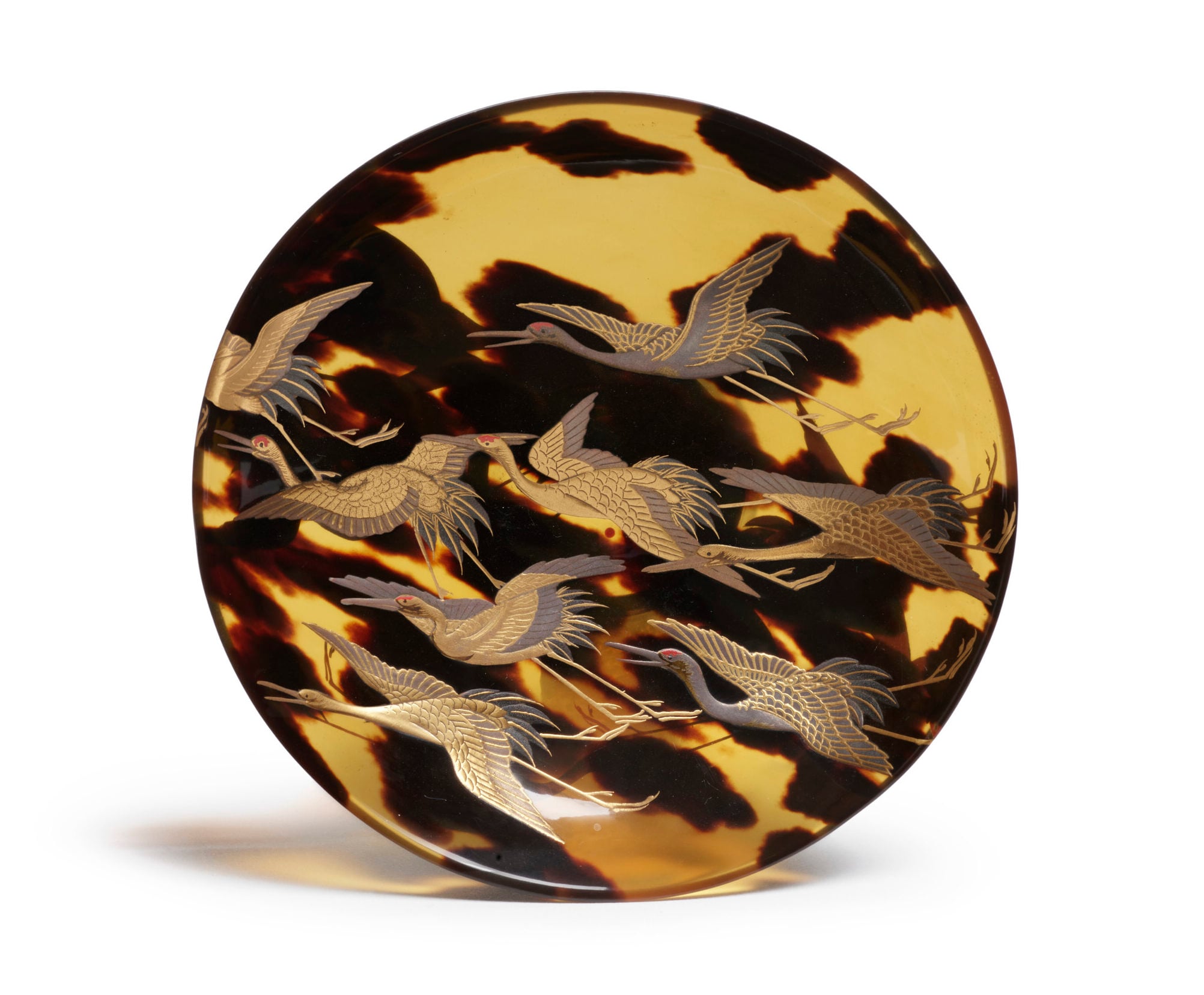
Sake Cup with Design of Flying Cranes, Japan, 19th century. Acquired by William T. Walters, 1876(?).
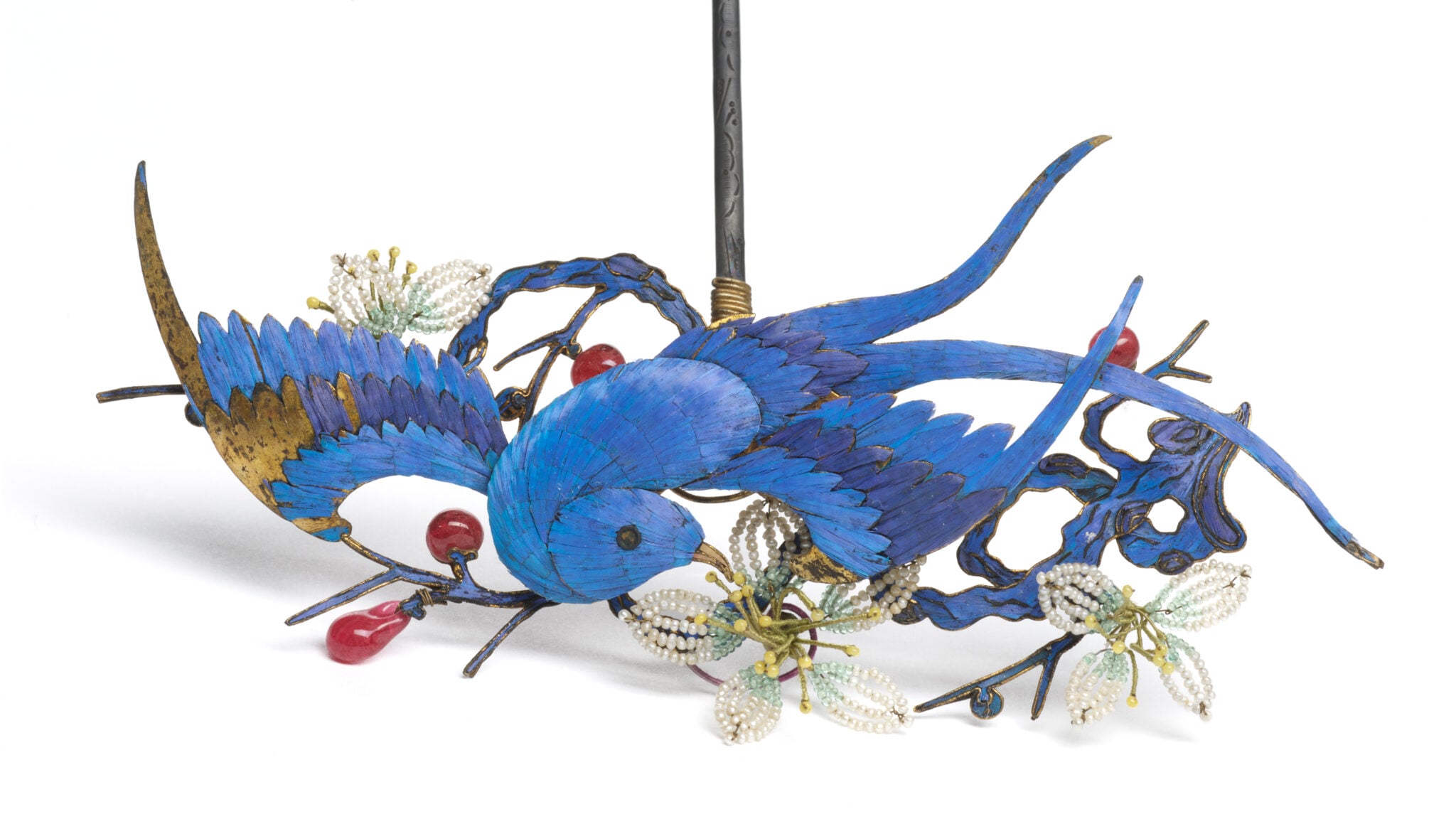
Hair Ornament in Form of Swallow, China, 19th century. Acquired by Henry Walters, 1907.
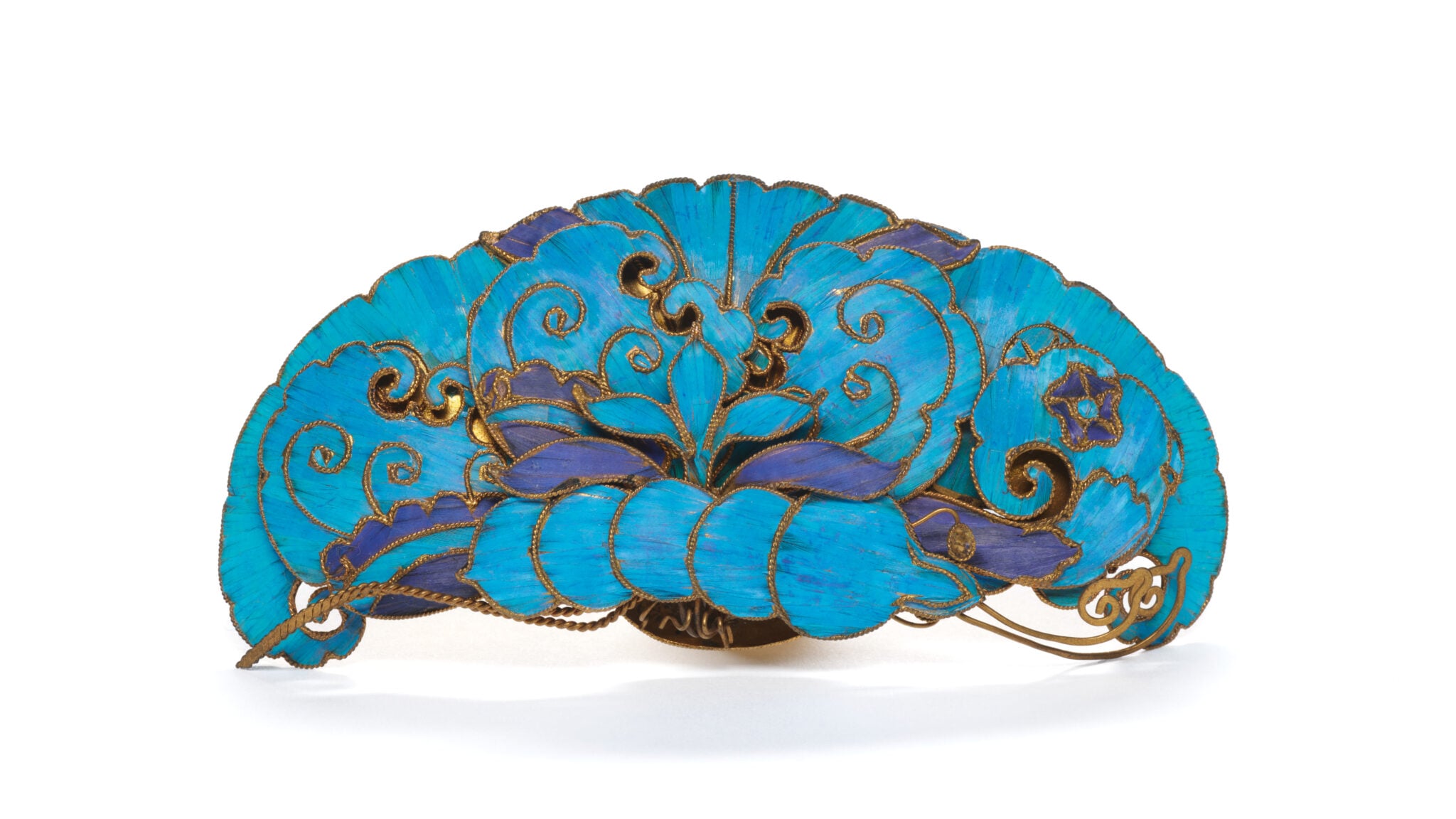
Hair Ornament, China, 19th century. Gift of Miss Ina B. Paul, 1963.
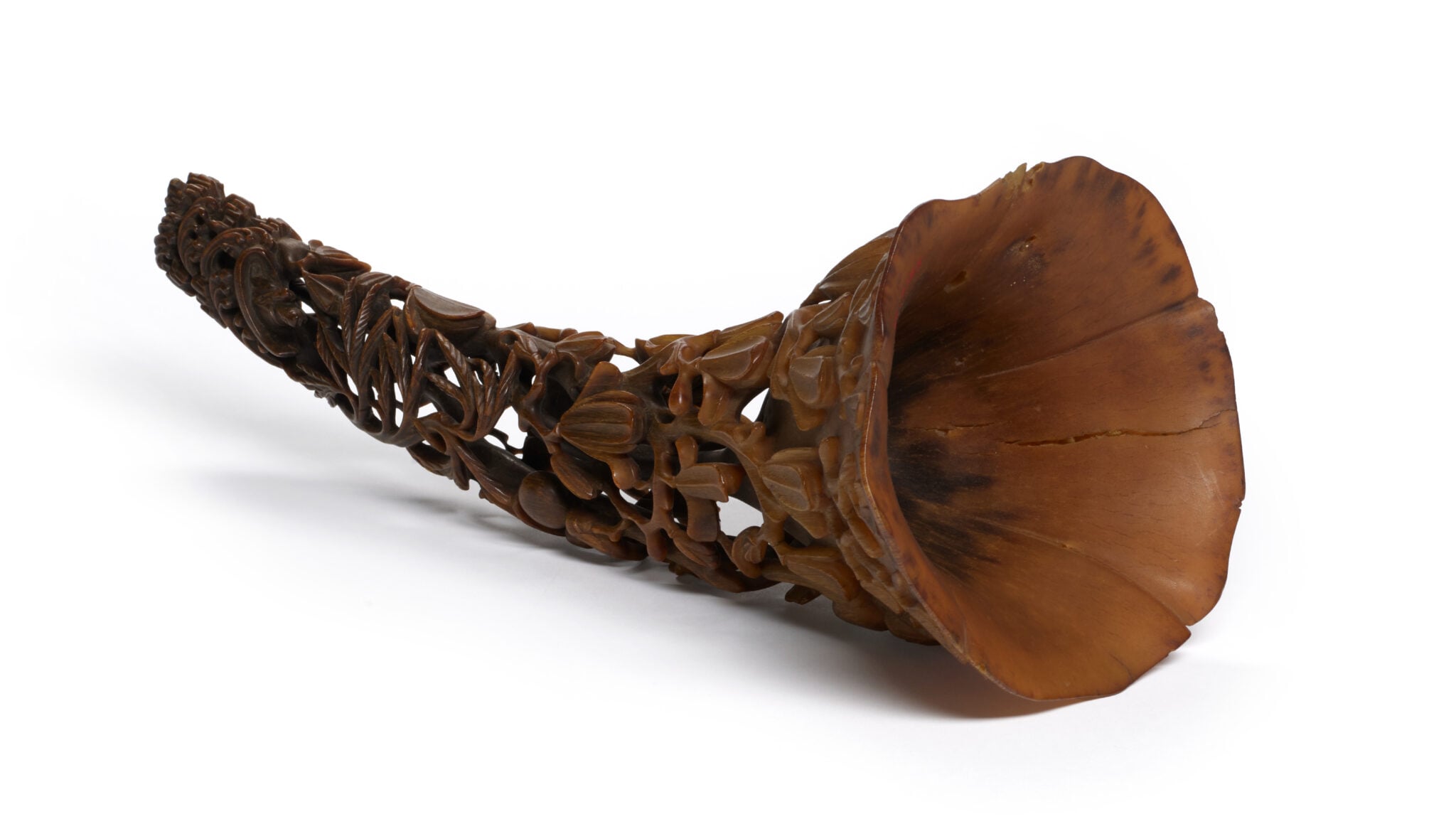
Cup in the Shape of a Flower, China, 19th century. Gift of Mrs. Cornelia Burton Machen, 1976.
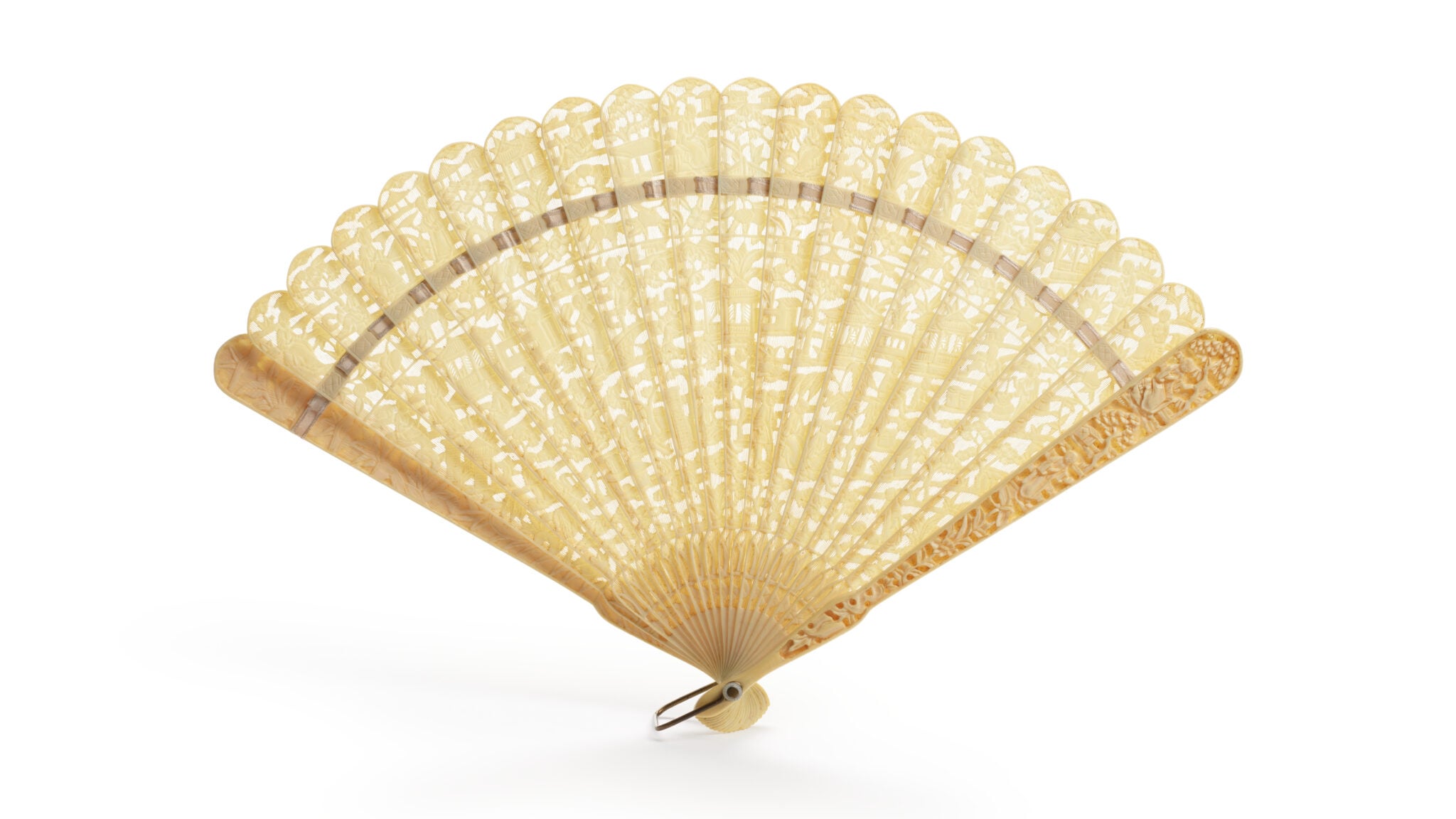
Brisé Fan, China, mid-19th century. Gift of Mrs. Frances Cushing Hall, 1970.
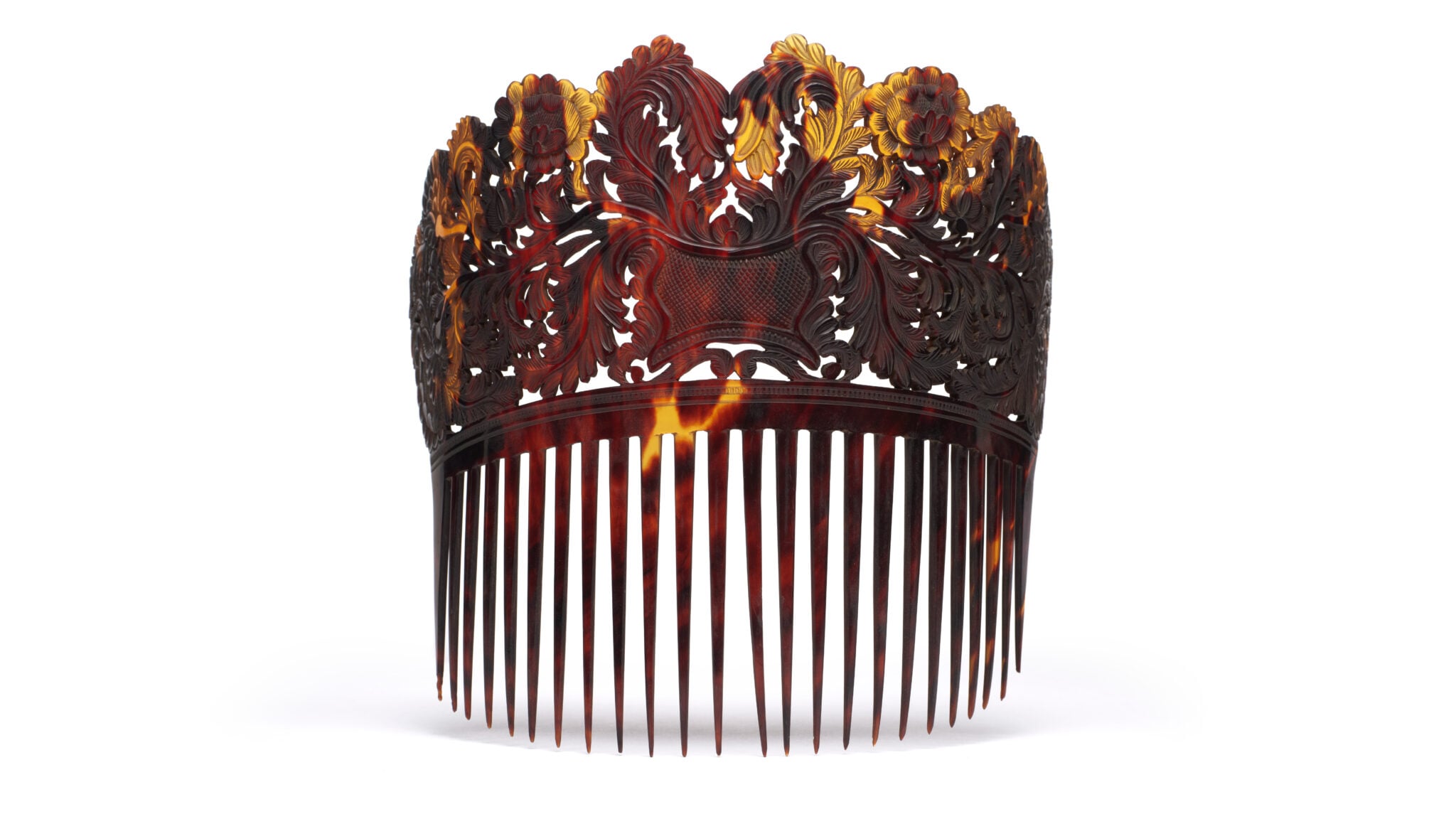
Hair Comb with Design of Floral Sprays, China or United States, 19th century. Gift of Mr. and Mrs. Henry Pratt.
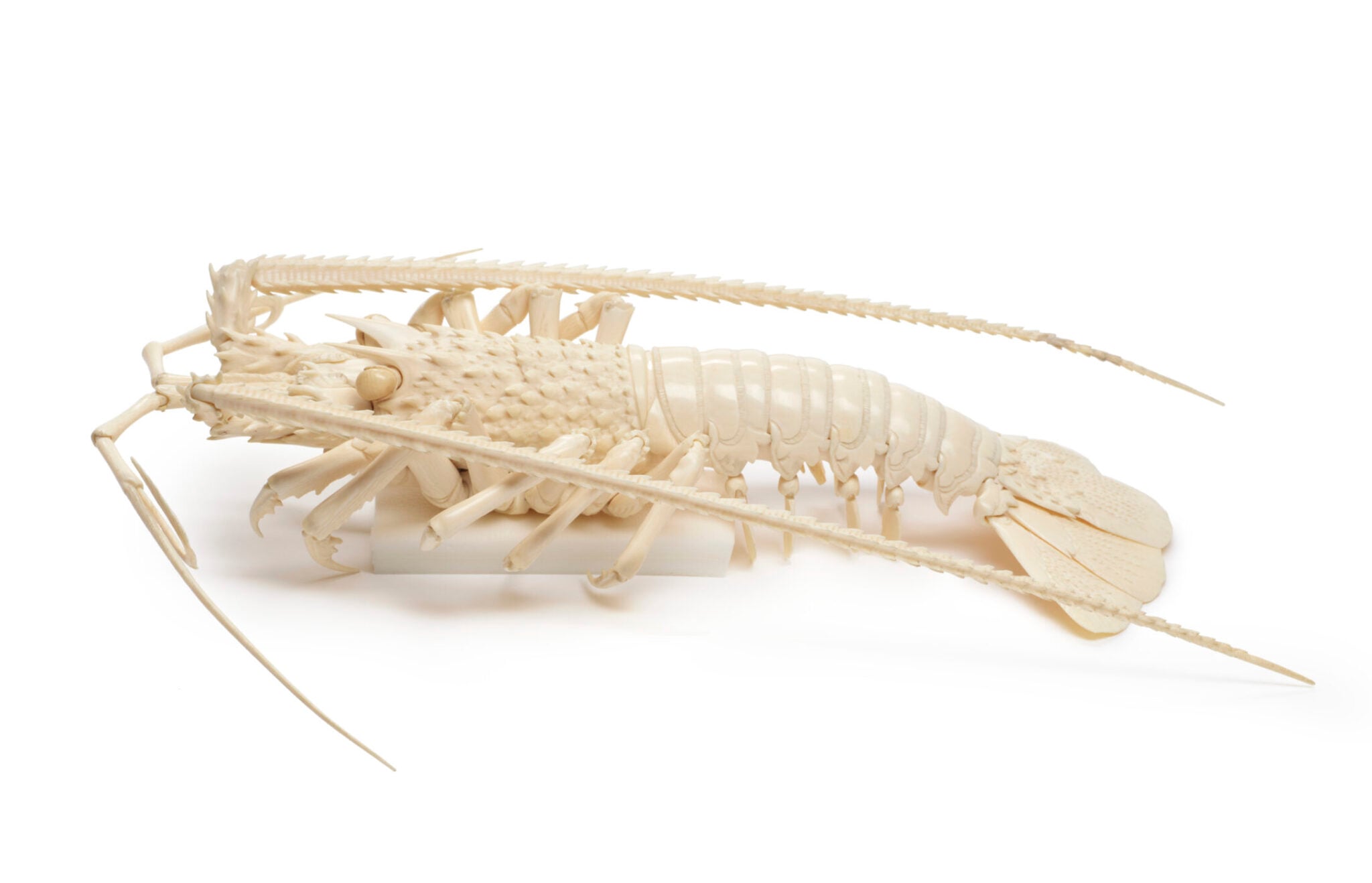
Articulated Spiny Lobster, Japan, second half of the 19th century. Gift of Ambassador and Mrs. William J. Sebald, 1976.
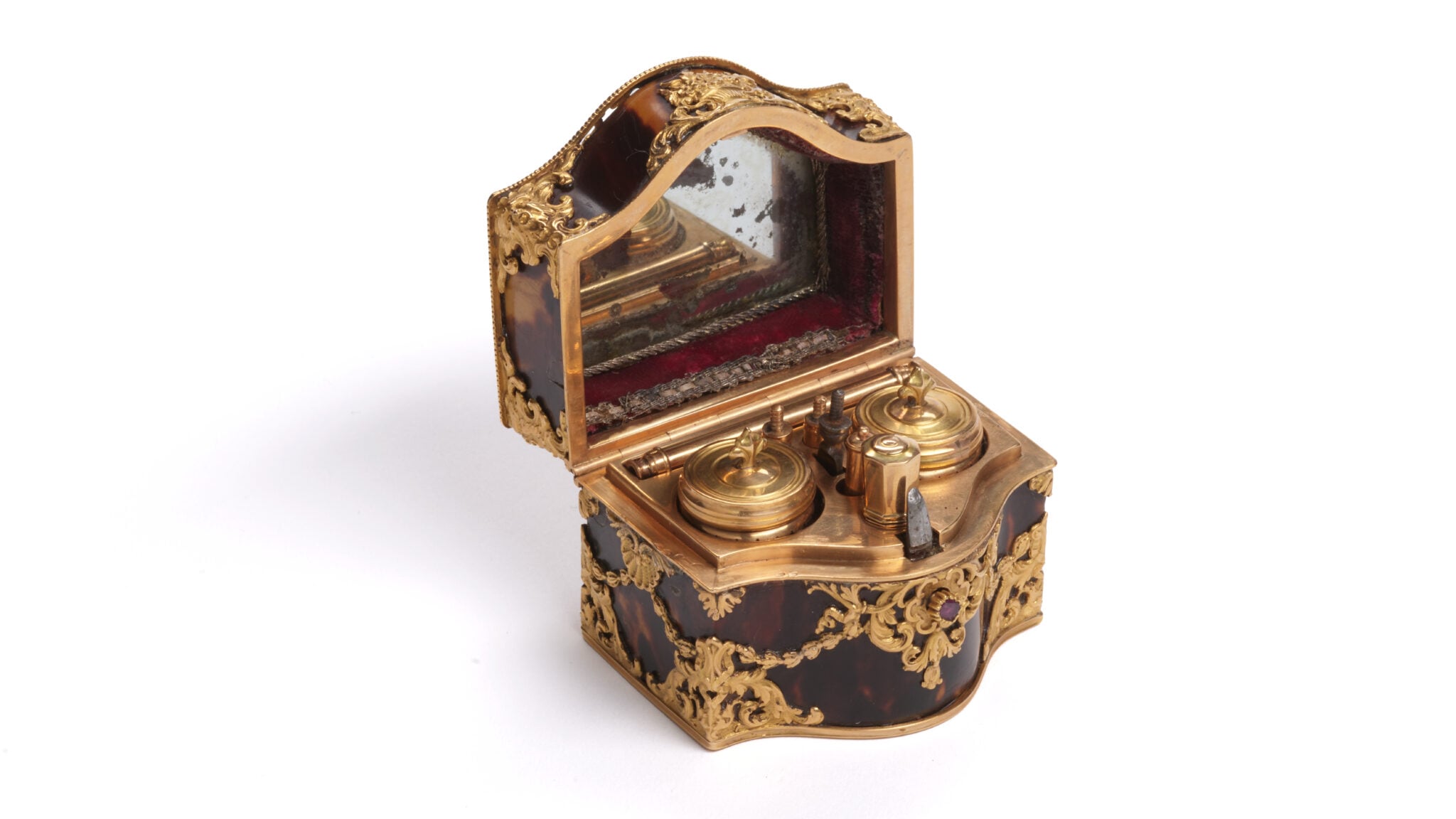
Writing Case, Germany, ca. 1755. Acquired by William T. or Henry Walters.
Kingfishers are small birds covered in iridescent blue feathers. Many species live in Southeast Asia, including southern China, Thailand, Vietnam, Cambodia, and Sri Lanka. China was the primary consumer of luxury objects decorated with kingfisher feathers and has a long tradition of featherwork dating back more than 2,500 years. As a luxury material, kingfisher feathers were used to adorn items such as accessories, jewelry, clothing, and screens. The exhibition includes delicate hair ornaments decorated with kingfisher feathers that were made in China during the 19th century.
Rhinoceros horn was prized in Asia and Europe for its patterning and translucency when carved. In both regions, cups and goblets made from rhinoceros horn became popular because people believed the material could detect poison. Rhinoceros horn was also used to make accessories and household objects, and in many Asian countries, ground rhinoceros horn was ingested as a medicine to cure fevers and other ailments. Luxury & Loss features a stunning 19th-century rhinoceros horn cup carved into the shape of a flower, with elaborate scrolling vines that pierce the length of the piece.
For thousands of years, elephant ivory was used across the world to adorn household items, to make personal items, and as a medium for painting and sculpture. Fueled by growing global demand, the ivory trade reached its height between the 15th and 19th centuries. However, this insatiable demand also contributed to the endangerment of African and Asian elephant species. An array of ivory pieces from many cultures are represented in the exhibition, such as a decorative bust of a Florentine woman carved by French artist Augustin Jean Moreau-Vauthier, a delicate Chinese brisé fan, and an articulated sculpture of a lobster made in Japan.
The shell plates of marine turtles, more commonly known as tortoiseshell, were prized as an artistic material for their patterning, warm colors, translucency, and shine. For thousands of years, hawksbill turtles and green turtles were hunted for their shells. The durable, lightweight, waterproof material was used to create furniture inlays, household objects, instruments, jewelry, and accessories. An elaborate German writing case and a pair of ornamental hair combs from China are on view in this section of Luxury & Loss.
“People’s relationship with these objects, and with nature in general, has changed.”
“Both the historical and contemporary artworks in Luxury & Loss speak to an enduring human desire for beauty and luxury, both globally and in our own backyards,” said Dany Chan, Associate Curator of Asian Art at the Walters and curator of the exhibition. “However, our relationship with these materials, and with nature in general, has changed. People are now more aware of their impact on the environment and more willing to talk about it. Today, the arts are a natural forum to explore the troubling concept of historical animal exploitation in the name of art by challenging viewers to consider how humans have been part of the problem of declining wild animal populations, as well as part of the solution.”
Contemporary works are featured throughout the installation to further underline the relevance of the topic at hand. Jenny Kendler’s Music for Elephants uses an antique player piano with ivory keys to play an eerie, meditative score based on an algorithm that predicts how long it may take for African elephants to become extinct. Kate MccGwire’s Ravish “reanimates” discarded feathers as caged serpentine creatures. Local artist Amy Boone-McCreesh’s Scarcity and Surplus uses faux tortoiseshell designs to examine how luxury and value continue to be constructed by society. And Tuan Andrew Nguyen’s My Ailing Beliefs Can Cure Your Wretched Desires, a stirring video installation, features an imagined conversation between the spirits of two extinct animals: a Javan rhinoceros and a turtle.
At the end of the exhibition, visitors have the opportunity to sit down and reflect on what they have seen. In this area, an audio installation offers stories of local conservationists’ efforts to solve human-made problems of wildlife endangerment. These firsthand accounts of struggle and hope from Gina Takaoka of Project Toad Ferry; Sarah Greenberg from the Oyster Recovery Partnership; Joe Corcoran from the Baltimore Bird Club; and Steve Kimble, a turtle biologist and professor at Towson University, bring voices from the Baltimore region into the discussion of this global issue.
Luxury & Loss: Feather, Shell, Tusk, Horn doesn’t have all the answers. Rather, this nuanced exhibition poses intriguing questions about the nature of art made from nature and creates space for visitors to consider the true cost of luxury.
This exhibition is made possible, in part, by the Gary Vikan Exhibition Fund,
The Hilde Voss Eliasberg Fund for Exhibitions, and support from Partners of
the Walters Art Museum.