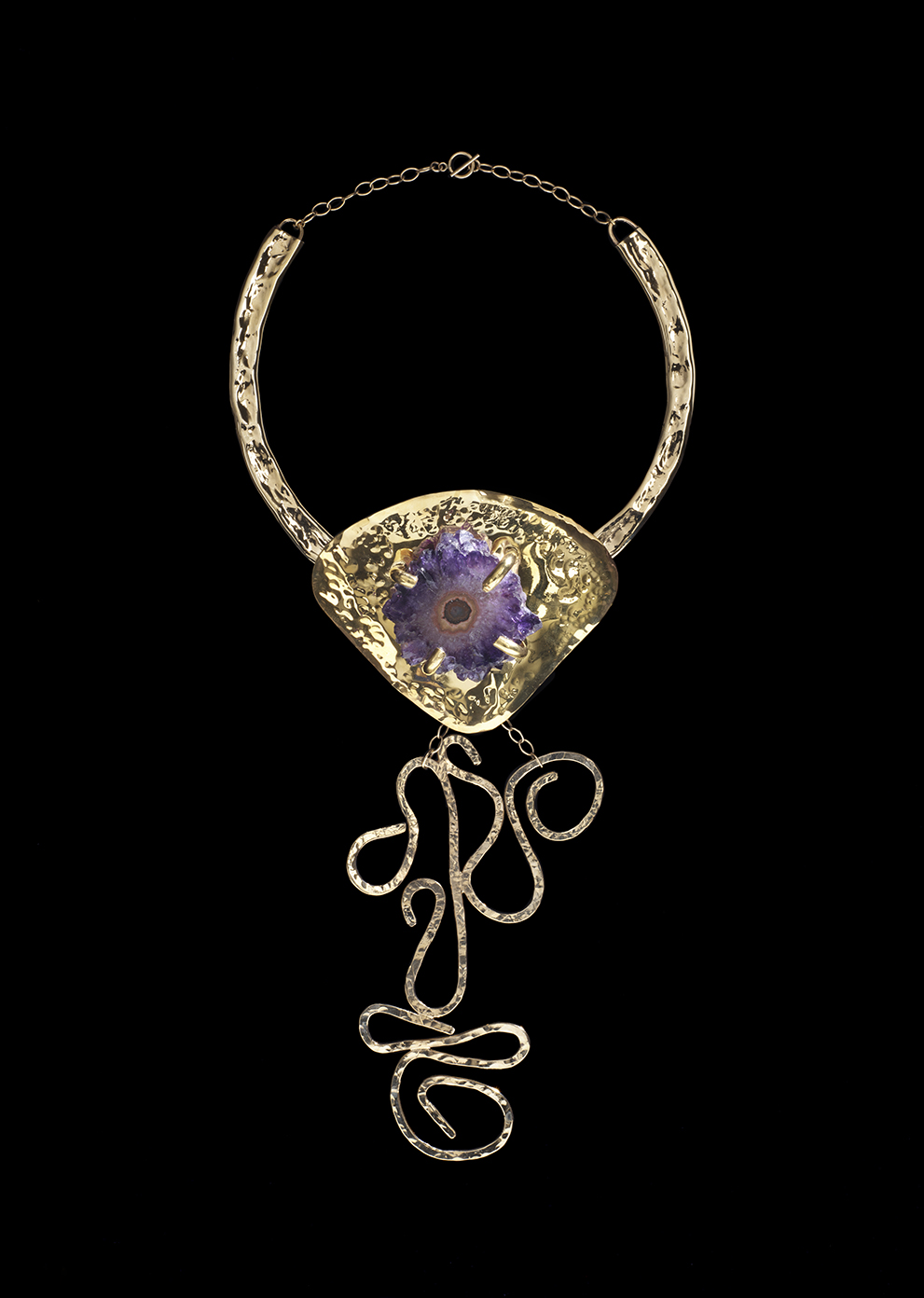
Flashback. Raised in Pasadena, California, Fletcher began making jewelry as a personal exploration of her identity and cultural heritage. “The nucleus of my work is exploring myself and Self with a capital S, like my capacity, my creativity, my Blackness, and my womanhood,” Fletcher said. In an effort to better understand herself and where she came from, Fletcher traveled to South Africa in 2008 to learn more about her African roots. While there, she was profoundly moved by the crafts and makers she saw all around her, like intricate, colorful Zulu beadwork.
However, it wasn’t until 2010 that Fletcher got more involved in making art herself, after she saw someone making jewelry using copper wire. She was immediately attracted to the work and went on YouTube to learn wire-wrapping techniques. When she tried her hand at looping and coiling wire, “it’s as if this fire lit up within me, which I had never felt before,” she said. As she progressed in her craft, she sought inspiration from sources that reflected her African, African American, and American heritage.
Fletcher started researching the work of artists like Alexander Calder and Art Smith for ideas. Their bold, sculptural pieces and imaginative use of wire significantly influenced her budding techniques. Ancient pieces like a wire-wrapped Egyptian ring in the Walters collection also made a significant impact on the artist. “Seeing simple, handcrafted sacred objects created outside of Eastern and Western belief systems piqued my curiosity, and they changed how I think about using adornments to represent ideology,” said Fletcher.
In 2012, Fletcher moved to New Orleans, where she took a metalsmithing course to learn basic techniques. She dove deeper into the connections between spirituality, culture, identity, and wearable art through her artistic practice, incorporating beads and gemstones into her work and exploring traditional forms of adornment and their role in community and ceremony inspired by her travels to South Africa. Over time, by blending metalsmithing, wire-wrapping, and beading techniques, Fletcher developed her own unique style.
Then, in 2016, Fletcher met Academy Award–winning costume designer Ruth E. Carter at a private jewelry event hosted by actress CCH Pounder. Not long after, Fletcher was working as an extra on the miniseries Roots (2016), and Carter, the project’s costume designer, recognized the jeweler on set and invited her to create adornments for an upcoming scene. Although she had little time and few resources, Fletcher got to work. This marked her first foray into film and television.
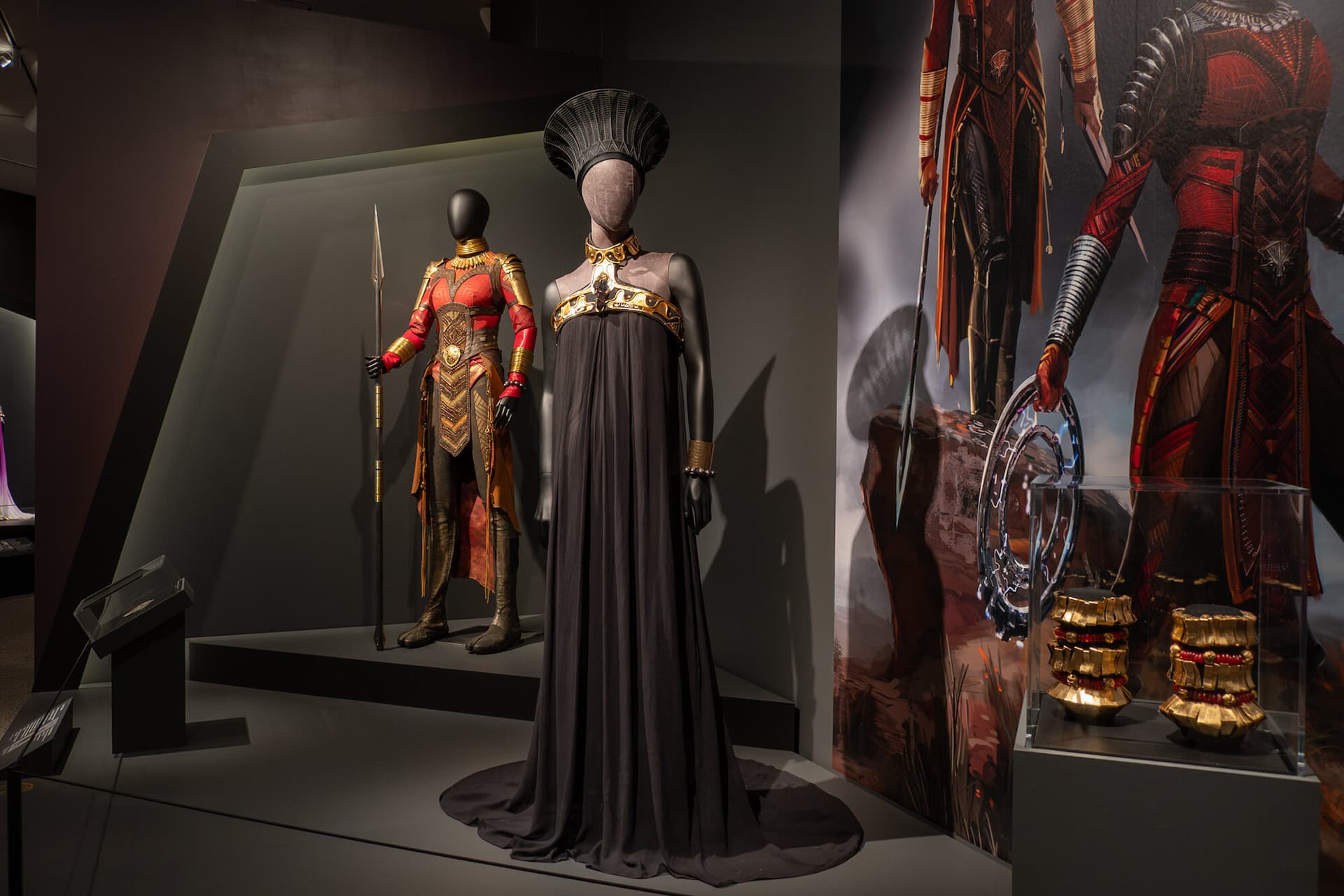
After that initial collaboration, Carter and Fletcher teamed up to work on Black Panther (2018), Coming 2 America (2021), and Black Panther 2: Wakanda Forever (2022). Each project allowed the pair to more fully explore jewelry as a part of character development and world-building. By embracing the idea that adornment is a form of personal and cultural self-expression and a key element in storytelling, Fletcher was able to expand her practice from selling her jewelry at local markets to designing elaborate pieces seen onscreen around the world.