Heavy Metal
Published Summer 2025
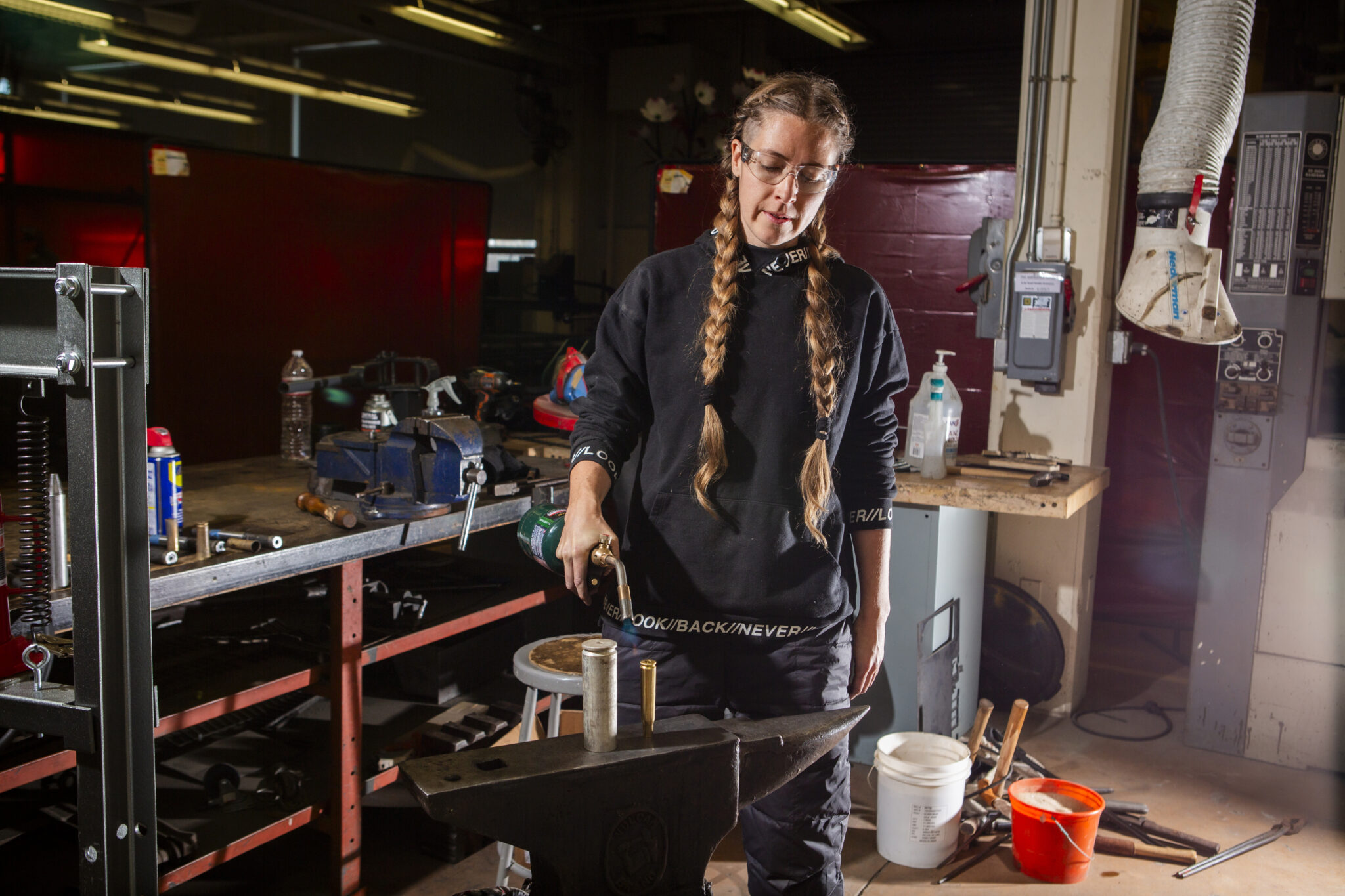
Mercedes anneals two types of bullet casings that will be used in her large-scale work.
Creating Transformative Sculptures with Artist Stephanie Mercedes
While many artists seek to root themselves in a single form of expression, Stephanie Mercedes describes herself as an “anti-disciplinary artist.” She works in nearly every medium, from opera and soundscape to sculpture and dance, but it’s metalwork sculpture that she returns to most often.
The Washington, DC-based queer Latinx artist comes from a long line of mechanics on her father’s side. When she was just a baby, he would strap her to his chest in a baby carrier and work on cars and motorcycles for hours at a time. “The idea of treating metal with respect and care, but also as a site for transformation and emotional connection, was instilled in my veins early on,” she said.
Mercedes puts those ideas into practice by creating sculptures that transform symbols of rage and violence into those of mourning and catharsis. Using skills she first observed by watching her father and later developed as part of her artistic practice, Mercedes manipulates reclaimed weapons and forges them into sculptural forms, drawing on a longstanding tradition of trench art—converting objects of war into objects of beauty and craftsmanship—but making it uniquely her own.
-
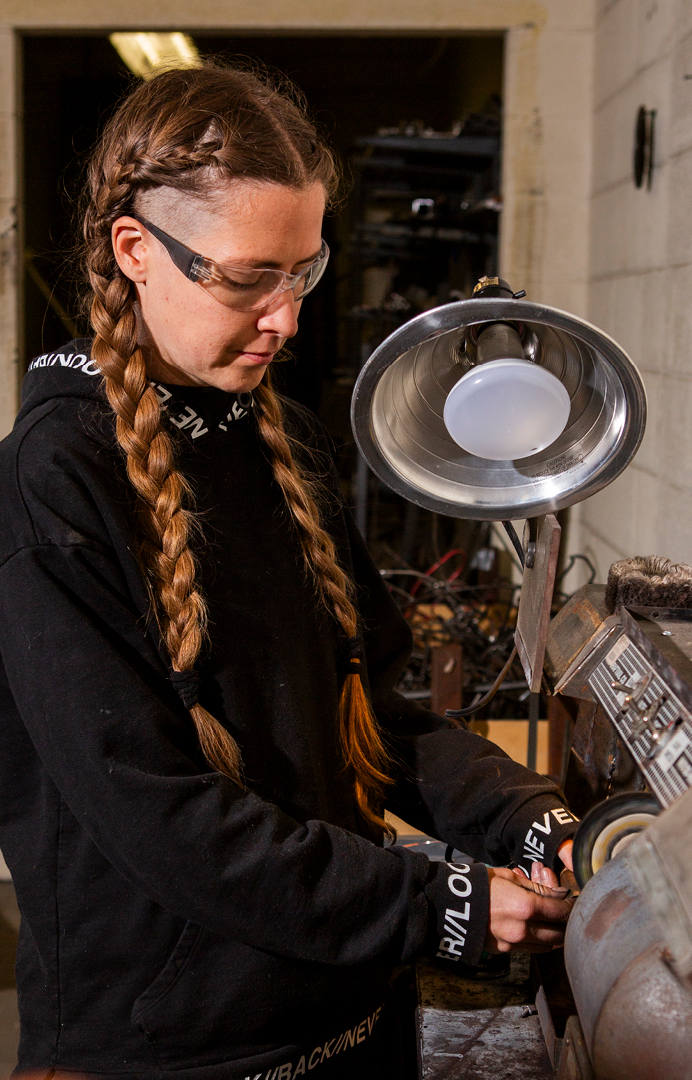
Artist Stephanie Mercedes buffs a bullet casing that she has transformed into a bell shape for her installation at the Walters.
-
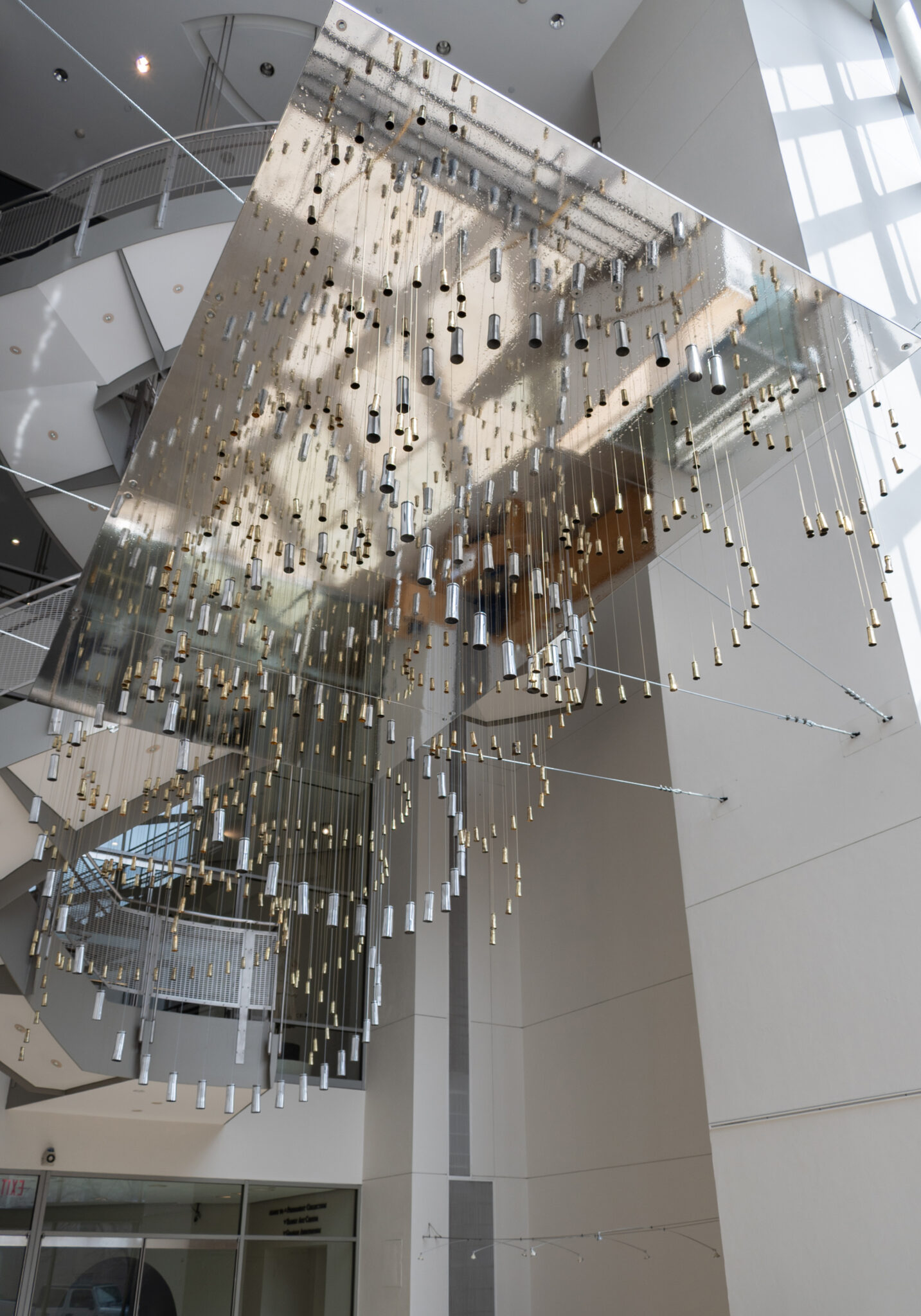
We Were Treated Like Numbers Rather Than Stars floats over visitors’ heads as they walk through the Centre Street atrium.
-
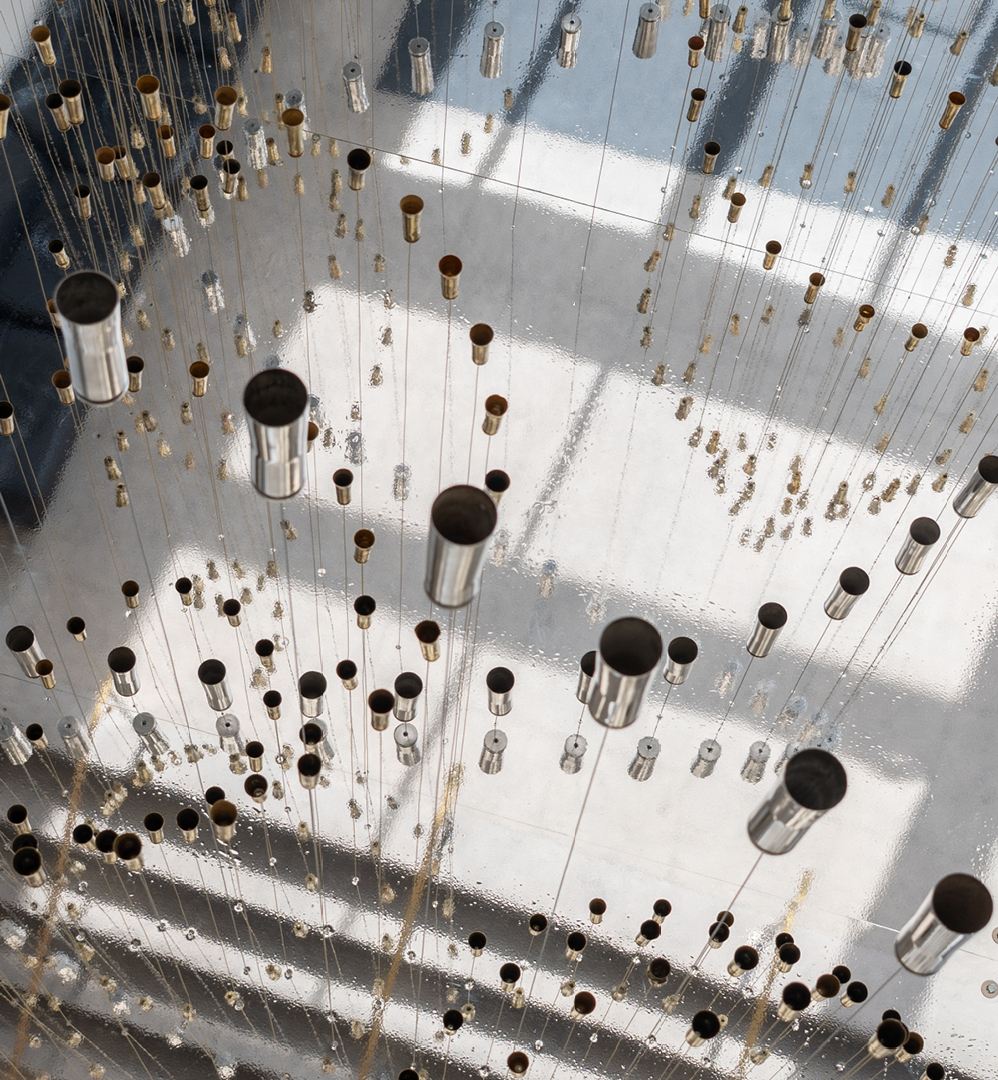
Mercedes noted that as visitors walk underneath the suspended bells, “they look like voids, like little holes in the sky.”
-
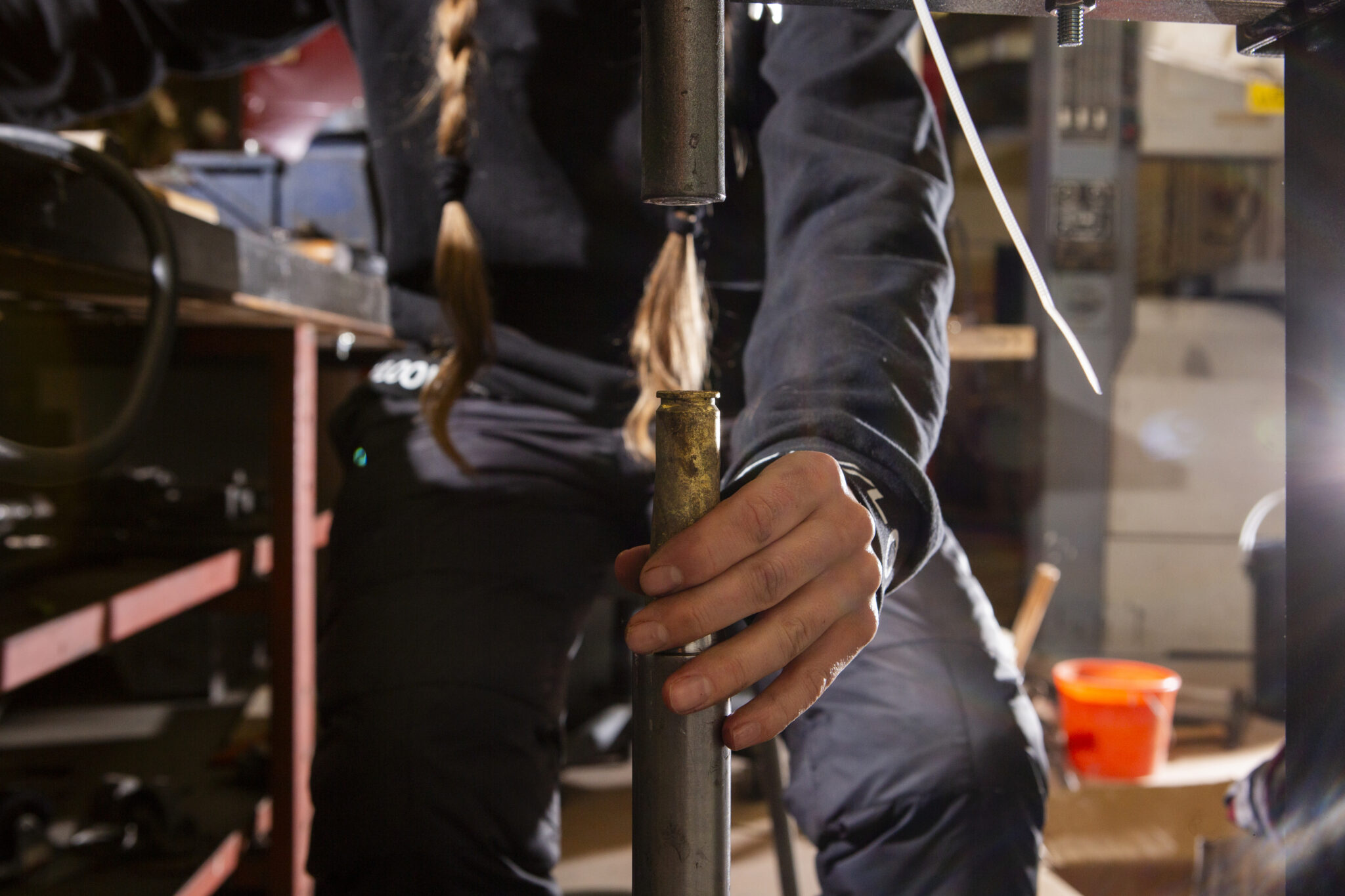
Mercedes uses a hydraulic press to help shape her bell forms, which she views as bi-gendered because they exist in two forms at once, as both weapons and instruments.
-
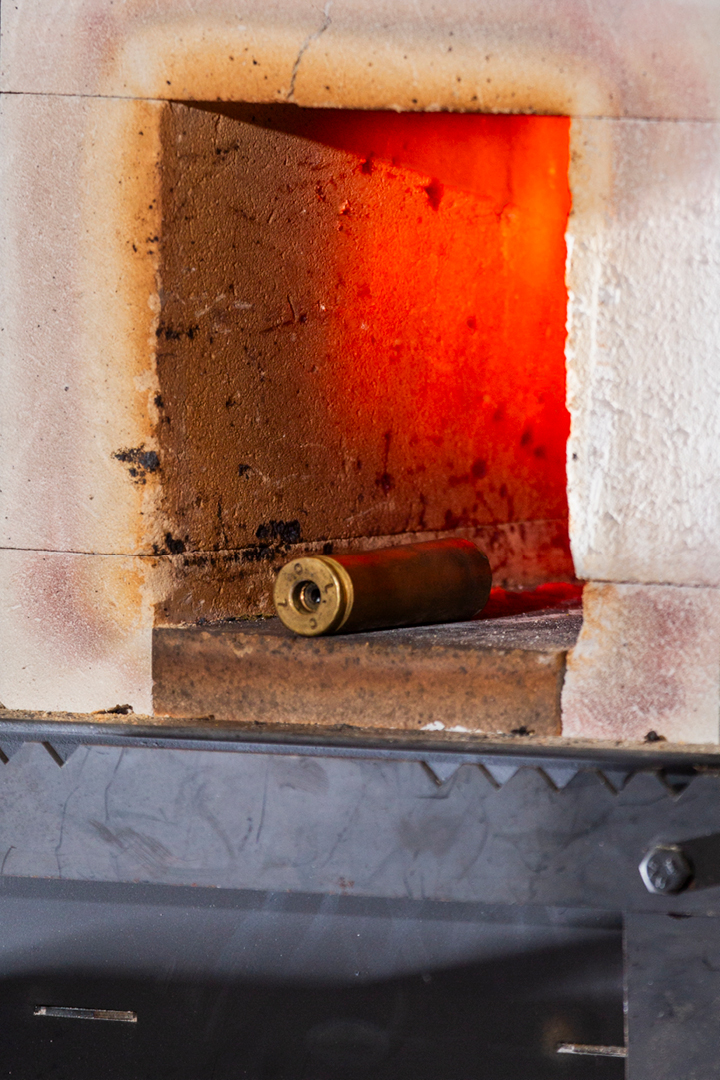
The bullet casings must be heated to very high temperatures
in order to reshape them. -
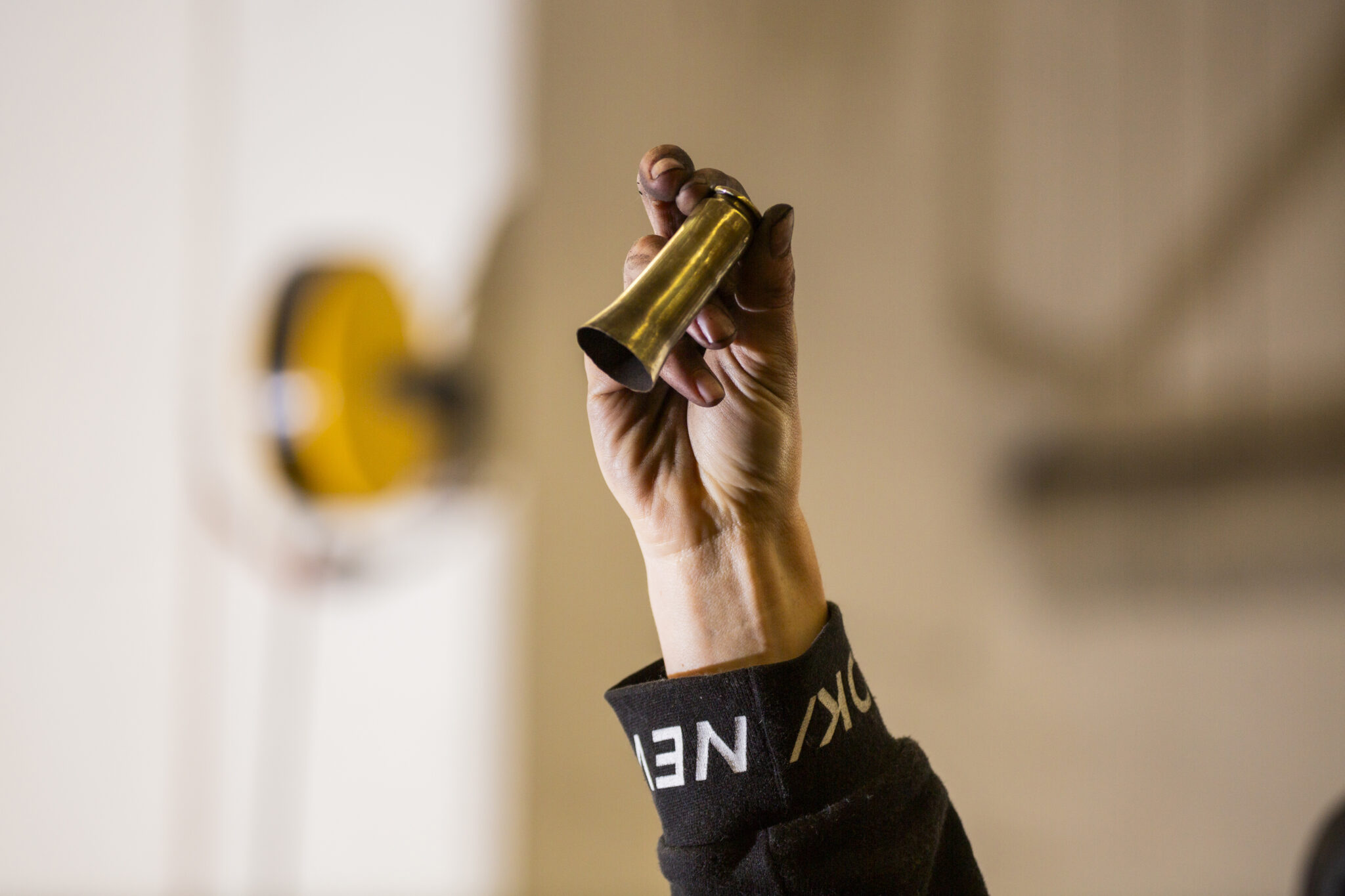
Hand buffing each bell is an intensive process that exacts a toll on the artist’s hands.
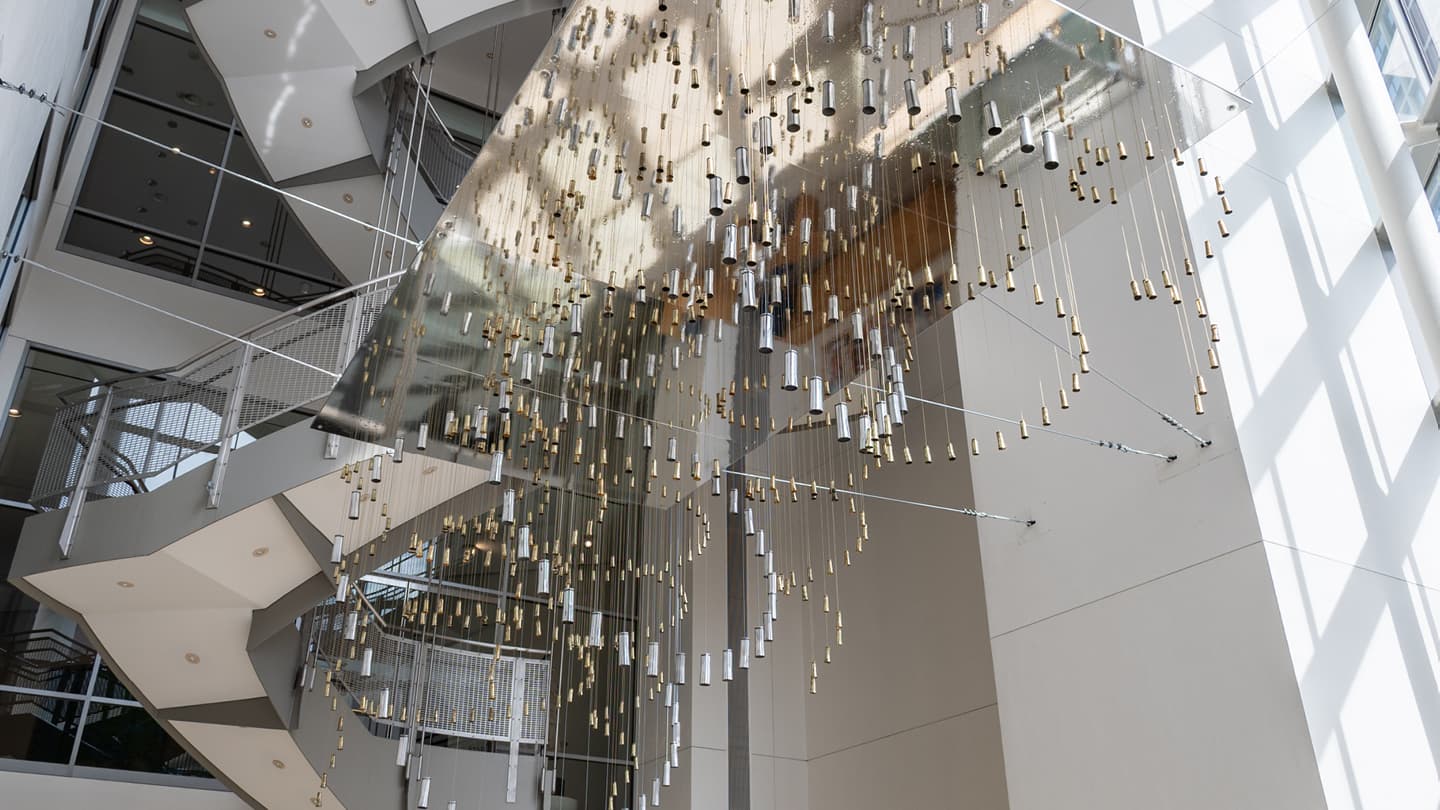
The Walters Art Museum commissioned Mercedes to create a sculpture for display in the Centre Street building’s atrium. In March 2025, the suspended sculpture went on view in the airy, glass-enclosed space that welcomes visitors to the museum. The large-scale work, entitled We Were Treated Like Numbers Rather Than Stars, spans 16 feet by 8 feet and is comprised of hundreds of brass and aluminum bullet casings used in the U.S. Army’s heavy machine guns and war tanks. The artist annealed and hammered the casings into silent bells that were then arranged in cascading, interlocking spirals.
Today, the pervasive reality of gun violence forces us to confront the daily war at home. The installation reflects on the spiral-like nature of trauma, grief, and emancipation. As viewers move through the installation, different spiral forms come in and out of focus—as viewers’ perspectives shift, so does their experience of the work. The spiral forms also call to mind the concept of the “Socratic walk”—a philosophical practice that encourages critical thinking by asking questions while walking along an often meandering path.
As visitors pass through the atrium, they can view Mercedes’s work from multiple angles, inspiring a shift in perspective. Those who look down on the work from above via the atrium’s spiral staircase will see a secondary part of the installation: a banner depicting the annealing and hammering processes emblazoned with the words “METAL QUESTIONED THE WORLD WHEN THEY BECAME ONE.”
“Working with these materials is an interesting combination of power and softness.”
We Were Treated Like Numbers Rather Than Stars is the first artwork to be displayed in the Centre Street atrium since it opened 23 years ago in 2001. “By installing a dynamic contemporary work in a space that’s visible from the street, we’re connecting with the community at our doorstep in a new way,” said Gina Borromeo, Senior Director of Collections and Curatorial Affairs and Senior Curator of Ancient Art. “We hope this piece piques peoples’ interest, encouraging them to come inside and engage with the artwork on a deeper level.”
Working mainly with metal, Mercedes’s practice is intensely physical. For her Walters commission, she annealed, hammered, and buffed each of the hundreds of bullet casings into bell shapes in a process that was both monotonous and labor intensive. “Working with these materials is an interesting combination of power and softness,” she said. “Ultimately, I have to listen to what the metal wants and give it agency in the conversation. Metal is an aggressive material, and it will speak back, so you have to engage with it in a dialogue.”
Every part of the creative process serves as a mode of expression for the artist, who also incorporates the rhythmic sounds of metalworking, such as hammering and grinding, into her musical works and the repetitive motions into her dance pieces. Mercedes credits her family for starting her on the path to expressing herself through so many different mediums. In addition to drawing inspiration from her father’s automotive work, she also found motivation in her mother’s expression as a dancer and choreographer, her stepfather’s output as a musician, and her stepmother’s work as a Latin American art historian. “In light of their backgrounds, my practice makes sense,” she said. “I’m really a byproduct of these different histories coming together, and my experiences with all of them formed me into who I am today.”
Although her family served as an early artistic stimulus, Mercedes’s work is now fueled by internal forces. “What inspires my art today is mostly rage and trying to process that emotion,” she said. “I think that’s core to what it means to be alive right now,” Mercedes said. “I really want people to feel physically affected by my work. That’s why I also work in kinetic and sonic mediums. I want to create experiences that can engulf you—then you have the possibility to experience the sublime.”