Art with an Interconnected Spirit
Published Summer 2025
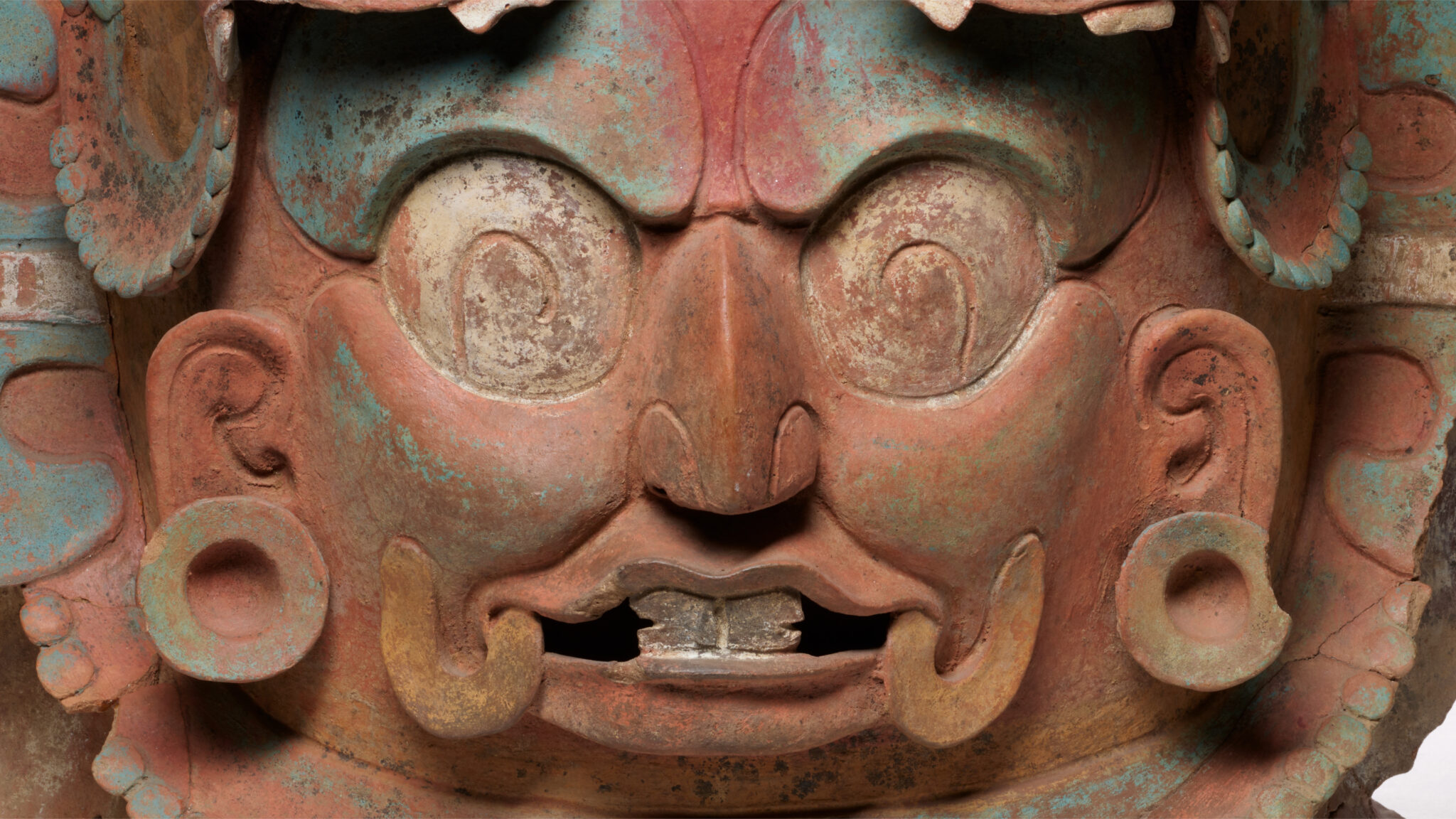
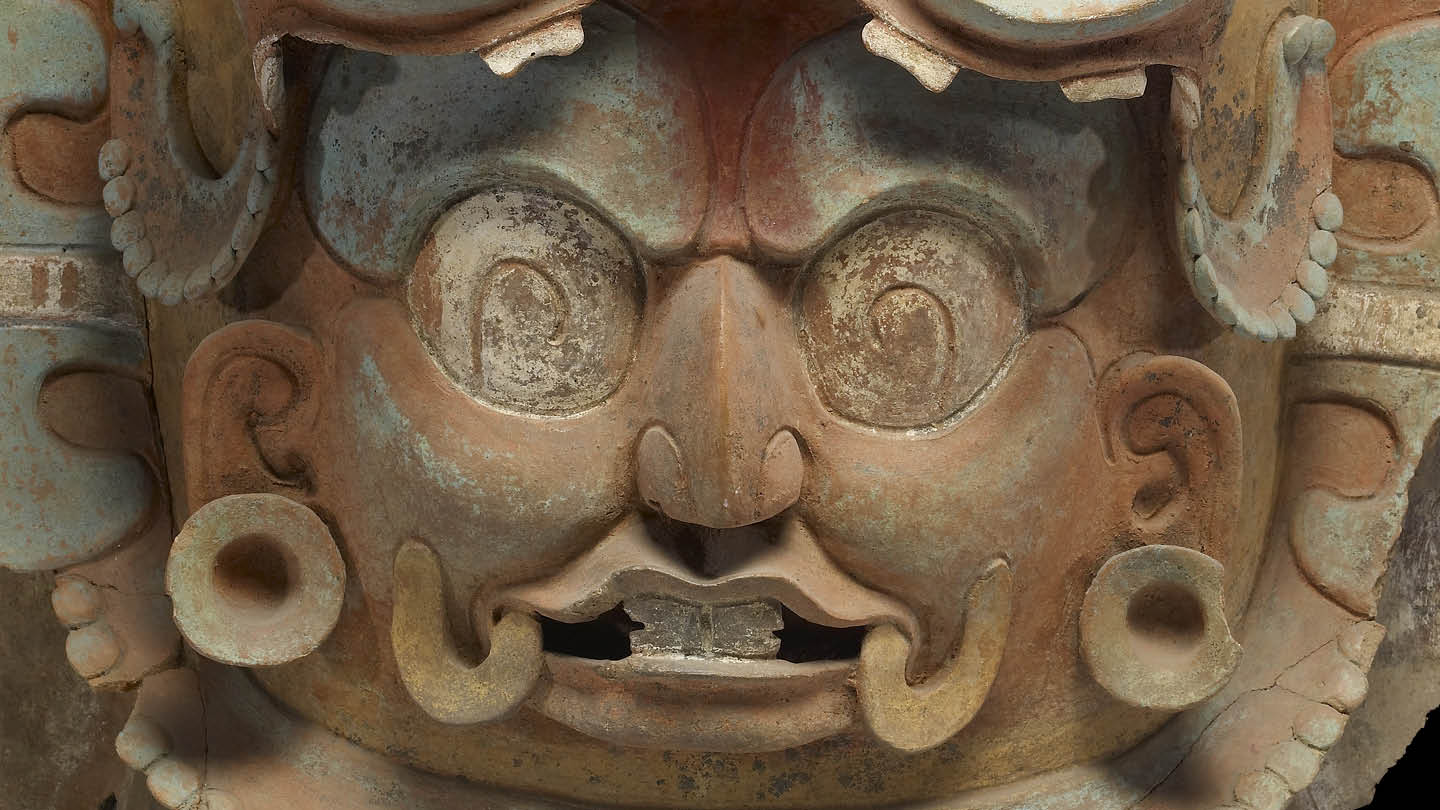
Burial Urn, K’iché (Maya) culture, Guatemala, 600-850. Gift of John Bourne, 2009.
Latin American Art / Arte Latinoamericano at the Walters
An unusual cacophony of sound recently filled the Walters Art Museum’s Palazzo Building. Hammering, sawing, and drilling could be heard as hard-at-work contractors traversed spaces usually brimming with centuries-old artworks and engaged visitors. What caused the unexpected orchestra of power tools? The deinstallation and renovation of the museum’s North Court galleries. Located just off the museum’s iconic Sculpture Court, these spaces saw their first major changes in 40 years to make way for Latin American Art / Arte Latinoamericano, the first long-term installation dedicated to this area of the museum’s permanent collection.
The galleries now look—and sound—much different. The walls have been freshly painted, the beauty of the original terrazzo flooring has been revealed, and some 200 Latin American art objects have been carefully placed in custom-designed cases. On May 17, visitors will be able to experience this long-planned installation that traverses 4,000 years and the artistic output of 40 cultures from North, Central, and South America and the Caribbean.
“The museum’s founders began acquiring art from ancient American cultures as early as 1897, decades before the Walters opened as a public institution in 1934. There has never been a permanent home in the museum to display these important objects—until now,” said Kate Burgin, Andrea B. and John H. Laporte Director and CEO. “Opening this exhibition is not just a way for us to honor the historic and ongoing impact of Latin American artists; it also presents an opportunity for our growing number of Latino/a/e neighbors to see themselves and their cultures celebrated here at the Walters.”
The pieces on view in Latin American Art / Arte Latinoamericano have been drawn from the Walters’ extensive permanent collection of Latin American art and are accompanied by a handful of loans and several newly acquired contemporary works. While specific beliefs and expressions differ among Latin American cultures, which span four millennia and thousands of miles, there is a broadly shared understanding that human, plant, animal, and mineral entities are all intertwined with a single life force. The majority of the exhibition’s artworks are made from or inspired by materials that are found in the natural world, including copper, clay, feathers, gold, jade, shell, stone, wood, and wool. These materials were considered by their Indigenous makers to be animated by a life force that unites communities and their artistic practices across time and space.
-
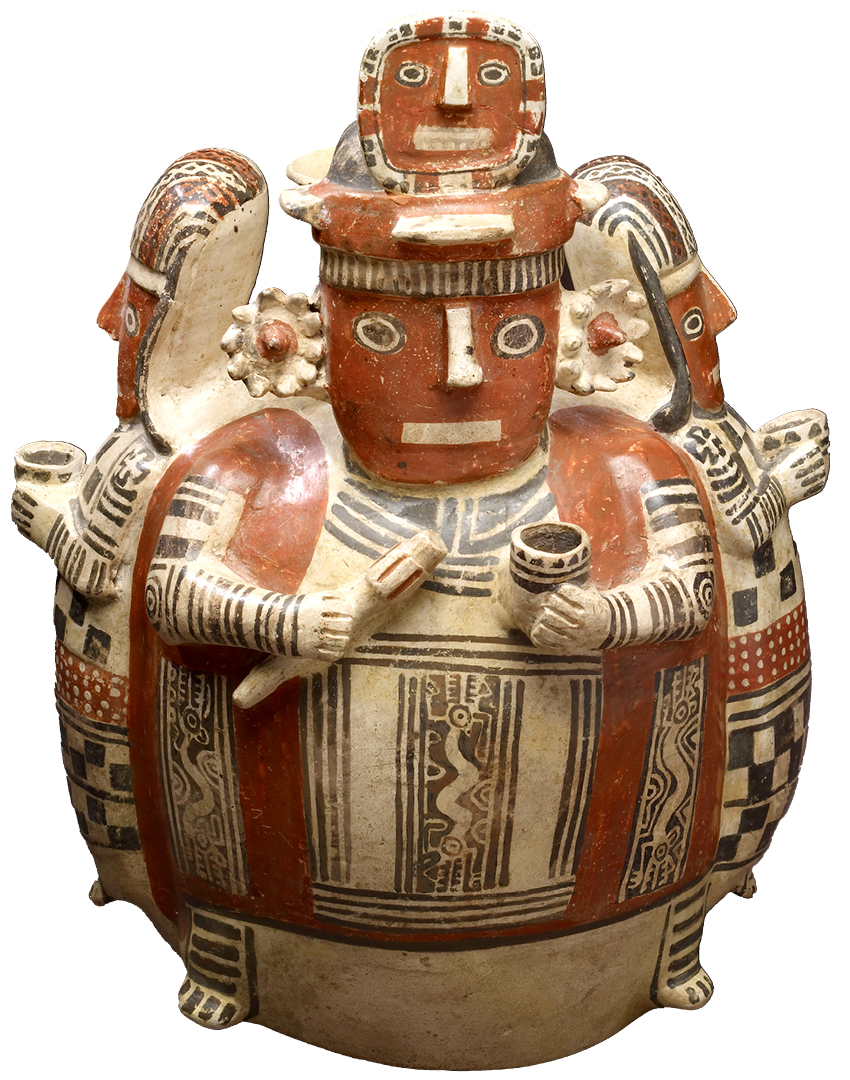
Effigy Bottle, Recuay culture, Peru, 200 BCE–500 CE. Gift of John Bourne, 2009.
-
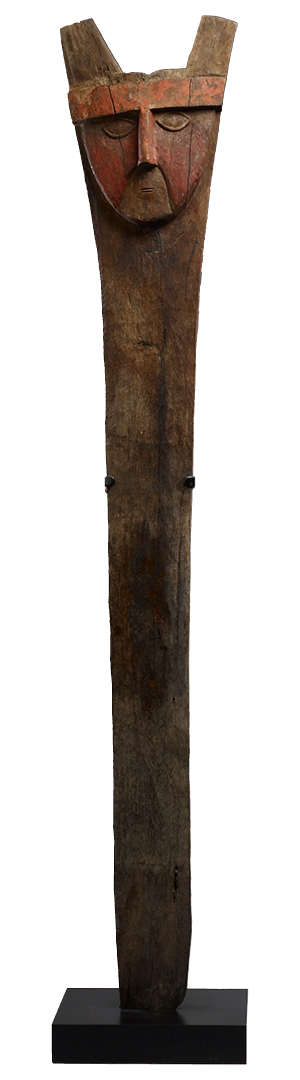
Post with a Carved Face, Ica-Chincha culture, Peru, 1000–1470. Anonymous gift, 2009.
-
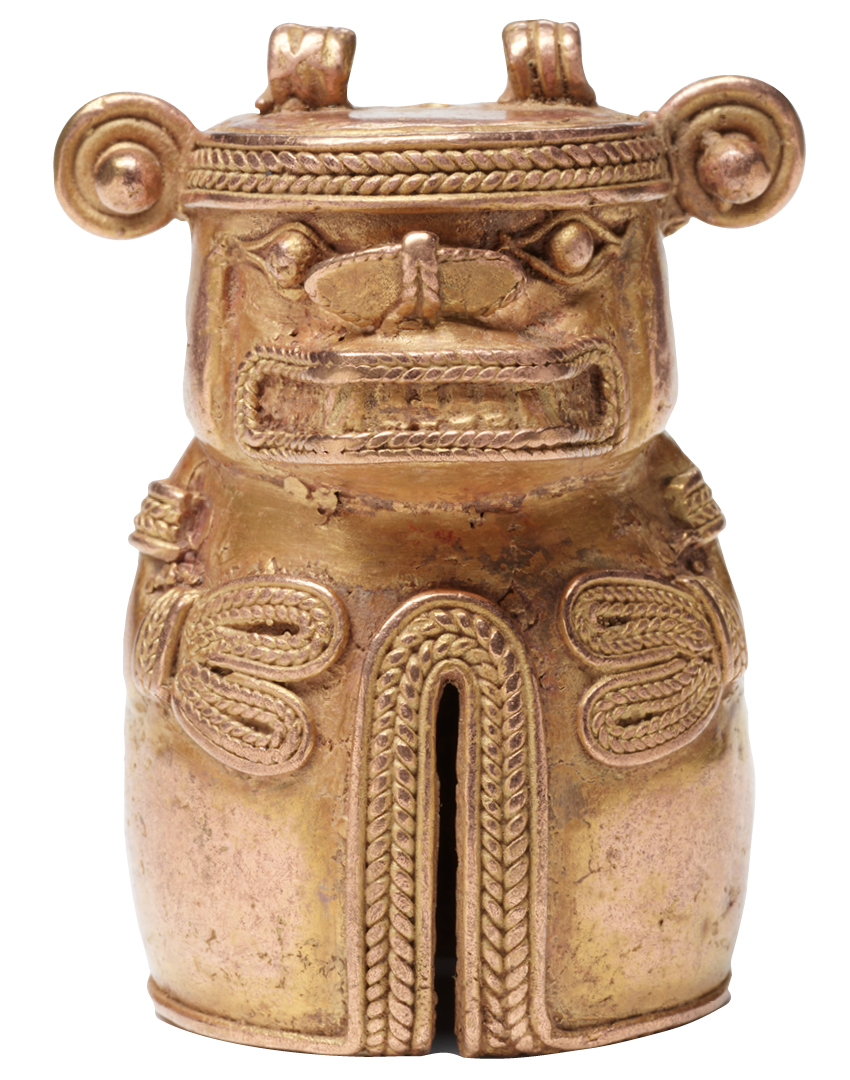
Bell with Bat / Animal Deity, Tairona culture, Colombia, 900–1500. Gift of Elena Austen Stokes, 2003.
-
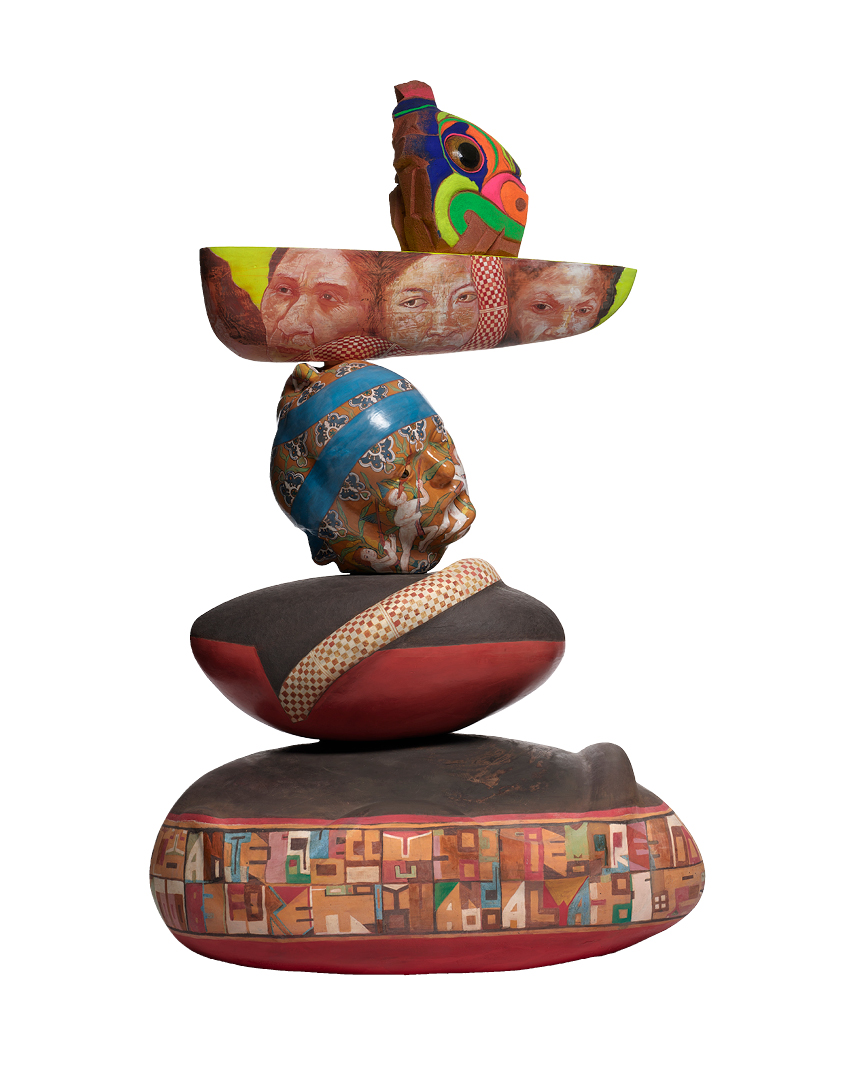
Kukuli Velarde, Wak’a del Agua, 2022–2023. Museum purchase, 2024.
-
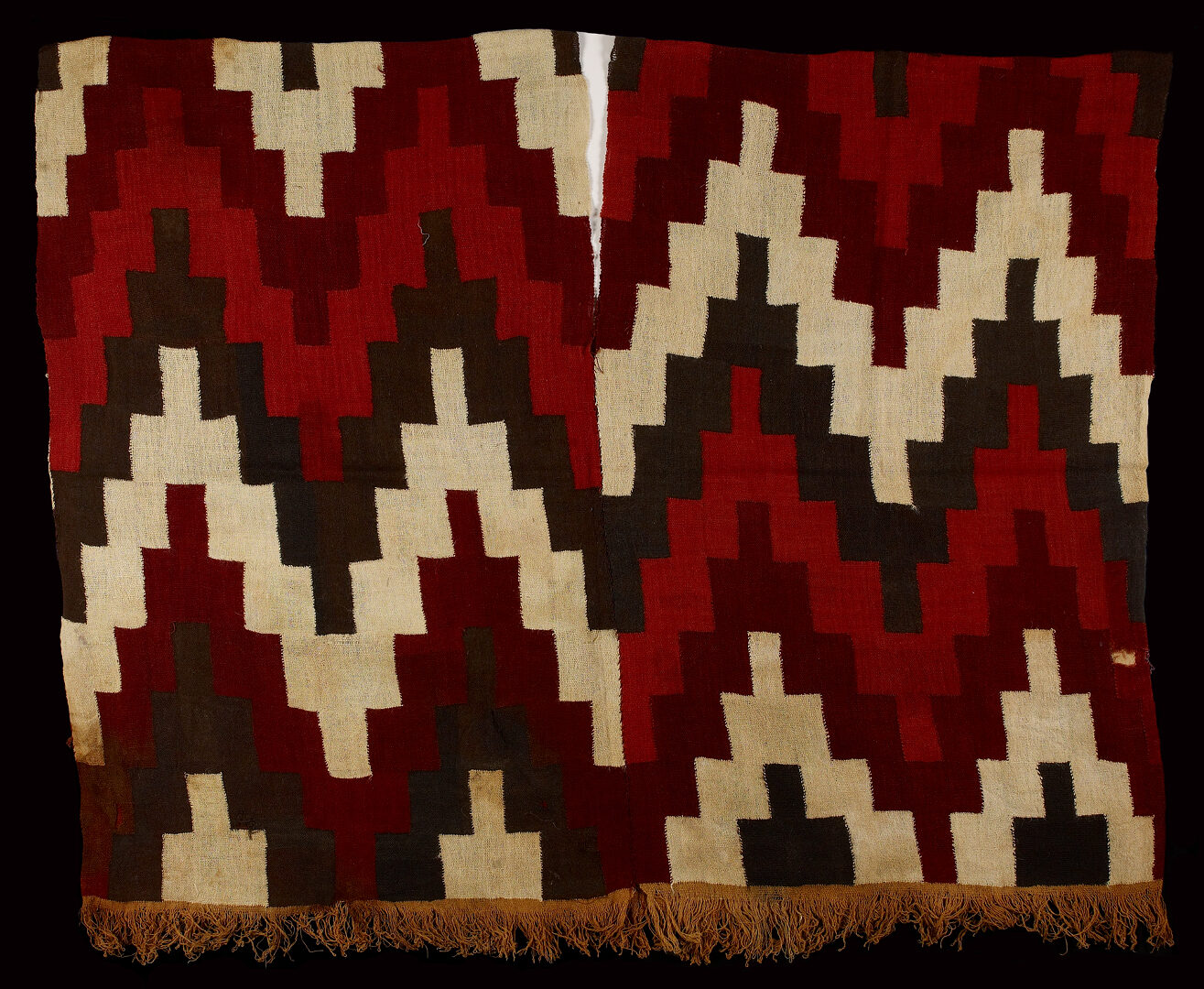
Tunic, Nazca culture, Peru, 400–600. Gift of Georgia and Michael de Havenon, 2016.
-
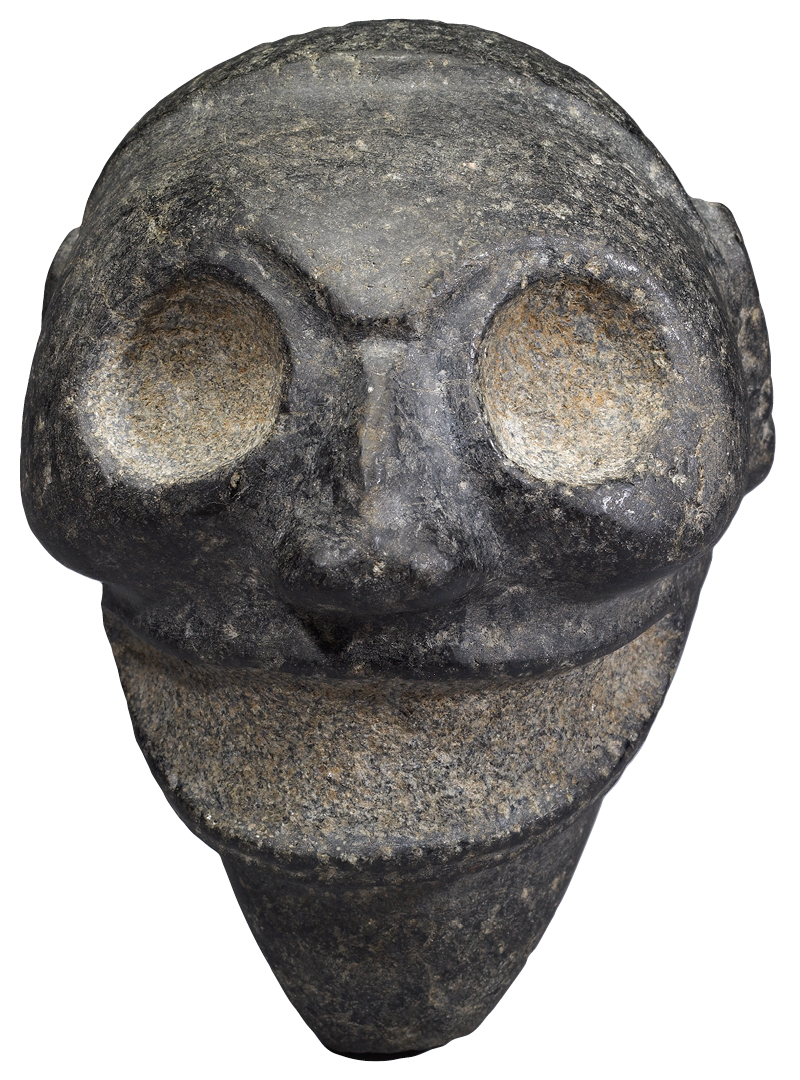
Zemí (Ancestor or Deity Figure), Taíno culture, Dominican Republic, 900–1500. Gift of the Austen-Stokes Ancient Americas Foundation, 2005.
-
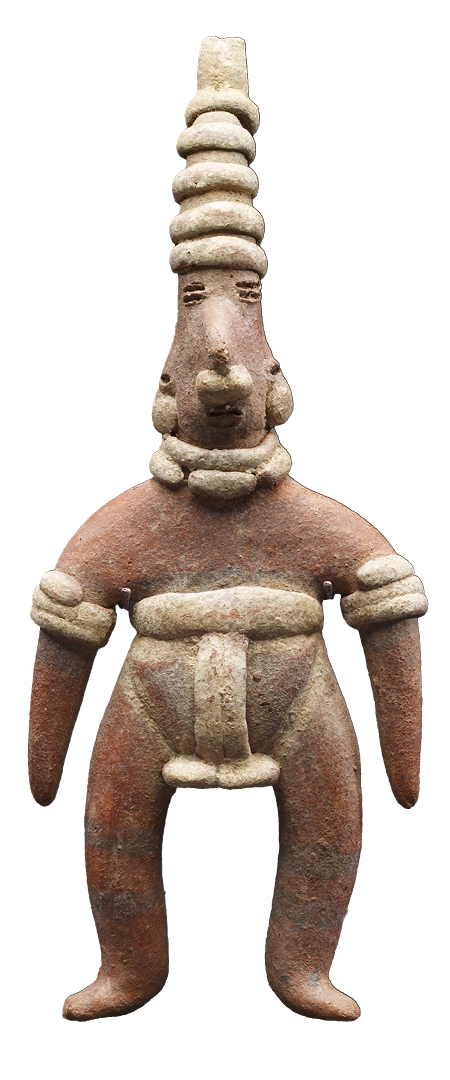
Ballgame Performer, Mexico, 100 BCE–300 CE. Gift of John G. Bourne, 2013.
-
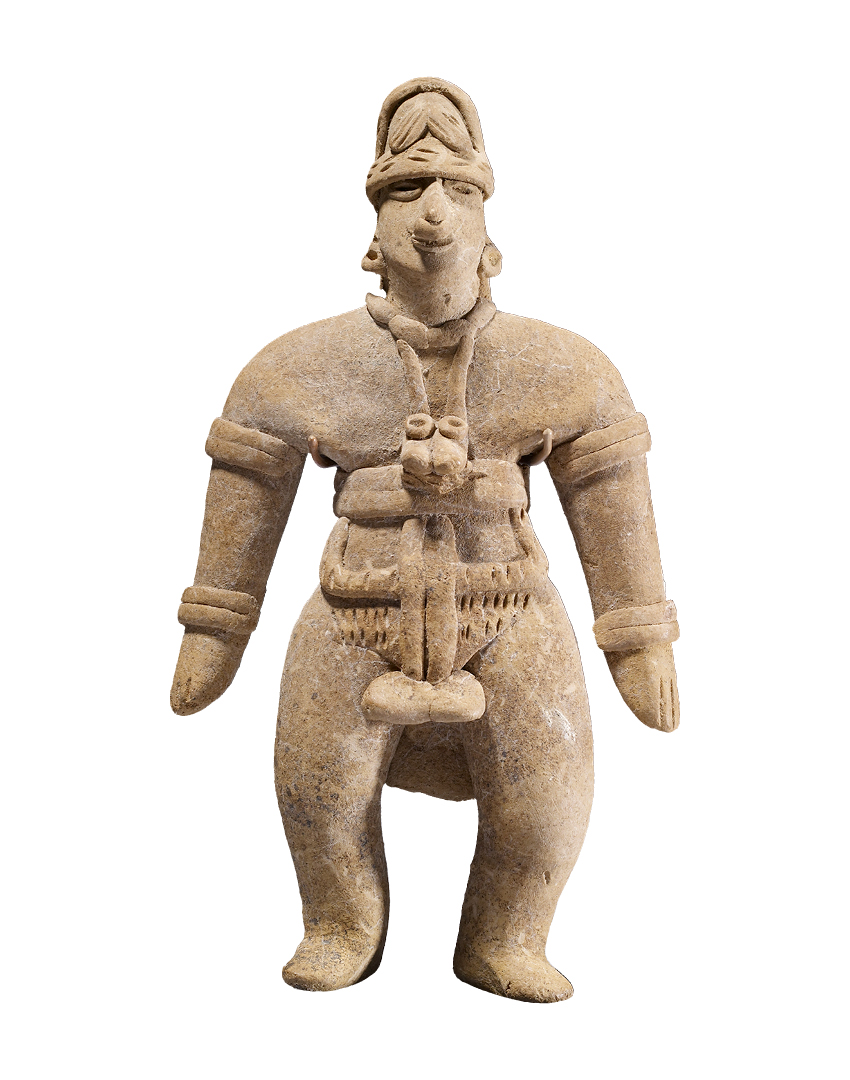
Ballgame Performer, Mexico, 300 BCE–200 CE. Gift of John G. Bourne, 2013.
-
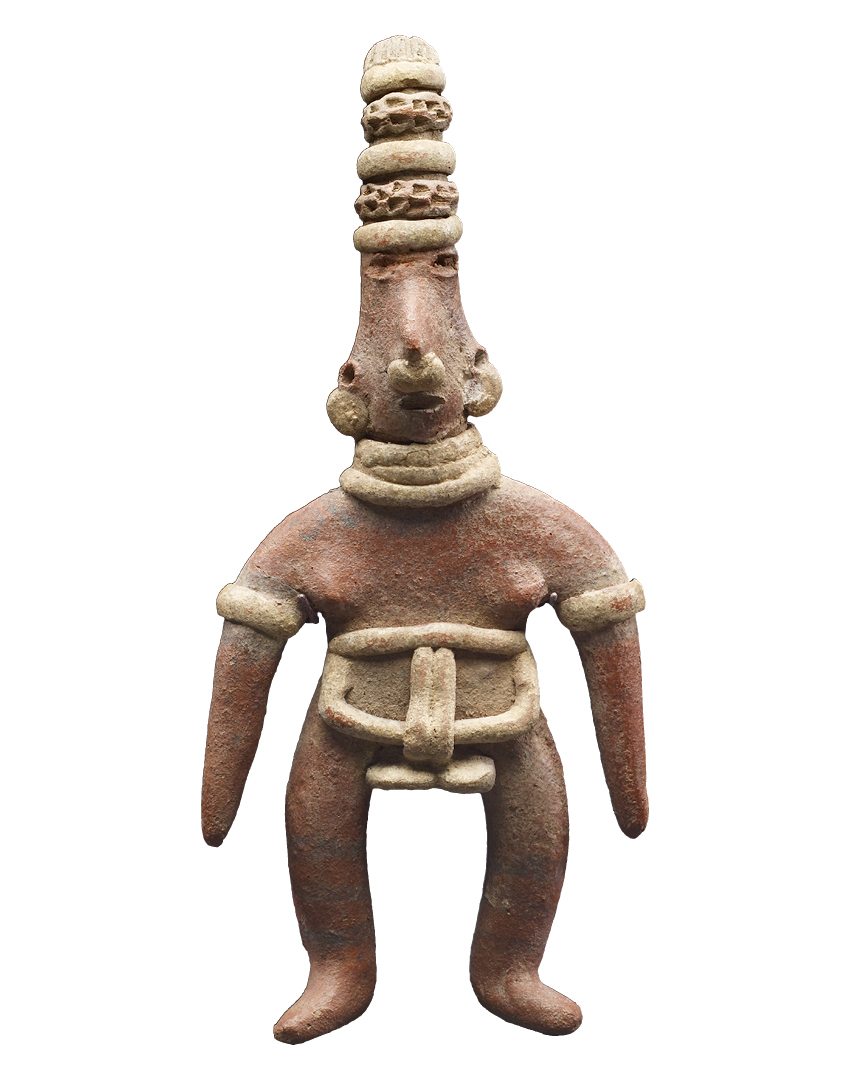
Ballgame Performer, Mexico, 100 BCE–300 CE. Gift of John G. Bourne, 2013.
“The core theme of this exhibition is rooted in the belief that a range of natural beings, such as animals, plants, and even places and minerals, possess the enduring power of life,” said Ellen Hoobler, William B. Ziff, Jr., Curator of Art of the Americas, who co-curated the installation alongside Patricia Lagarde, Wieler-Mellon Postdoctoral Curatorial Fellow, Art of the Americas. “Many works on view in Latin American Art / Arte Latinoamericano were made from or decorated with materials imbued with this inherent spirit, manifested through the qualities of those materials like richly saturated colors or shimmering surfaces.”
Across the Americas, materials hold deep meaning that refer to the subject they represent, as well as the region’s cultural values. For example, in ancient Mesoamerica, a cultural region spanning modern-day Mexico and parts of Central America, red pigments such as cinnabar and cochineal were used to decorate sacred and ritual objects and spaces. These red hues symbolized blood and life more broadly and were often sprinkled in tombs or used to adorn funerary objects to imbue them with a life-giving essence activated by their materials and decoration.
Examples of this can be seen in the works presented throughout Latin American Art / Arte Latinoamericano, which is arranged by both theme and geographic origin. Items from the Andes, Mesoamerica, Central America, and the Caribbean are grouped, while thematic cases explore various material uses, connections between cultures and the land on which they live, the Colonial period, rituals, ancestors, food and drink, glyphic texts, and more. Objects included in the exhibition demonstrate manifestations of the belief in an interconnected spirit, including textile pieces that reflect motifs from the natural world, ceramic effigy vessels shaped to look like animals, and gold and jade figural pendants.
“The core theme of this exhibition is rooted in the belief that a range of natural beings possess the enduring power of life.”
New acquisitions and loans by 10 contemporary Latin American and Latino/a/e artists complement the ancient and historic pieces on display and exemplify a continuation of belief in an inherent life force. Artist Ana de Orbegoso’s sculptures Neo-Huaco Resin (2023) and Neo-Huaco Concrete (2023) adapt an ancient Peruvian art form using modern materials. Baltimore artist Jessy DeSantis’s painting Cintli, Corn, Maíz (2020) depicts a multicolored corn cob with husks that transform into the long tail feathers of a quetzal bird, important symbols drawn from the artist’s Central American heritage. And award-winning contemporary artist Kukuli Velarde’s ceramic sculpture Wak’a del Agua (2022–23) references five periods in Peruvian history and prehistory, intersecting with several historic objects in the installation.
In a first for the Walters, some of the written materials in the installation will be presented in both English and Spanish. In addition, interactive gallery elements will reinforce the exhibition’s content. Reading nooks will encourage children and young adults to dive further into Latin American culture through myths and stories across time. Books are distributed throughout the exhibition so that their content corresponds to the cultural objects on view in those areas and will cover topics ranging from migration to sports.
A scent station in the Mesoamerican gallery will allow visitors to get a whiff of copal resin, a natural substance important to the ancient Maya. This aromatic tree resin was often burned as incense by those making offerings to their ancestors. Visitors can also get a feel for ancient glyph text at a touch station. Two symbols for “chocolate” found on a lidded Mayan vessel in the museum’s collection used for serving chocolate have been re-created through 3-D printing. Attendees can see the original carvings and then feel the copies for themselves.
Video stations will allow visitors to explore several living Latin American traditions in depth, learning from community members who are preserving them. Among the presenters, Baltimore artist Melissa Foss will share her practice of traditional flute making and playing; social media influencer K’ancha will discuss Quechua language and cultural preservation; and chocolatier Jinji Fraser and award-winning chef Carlos Raba will discuss chocolate and corn, respectively, and their place in Latin American food culture.
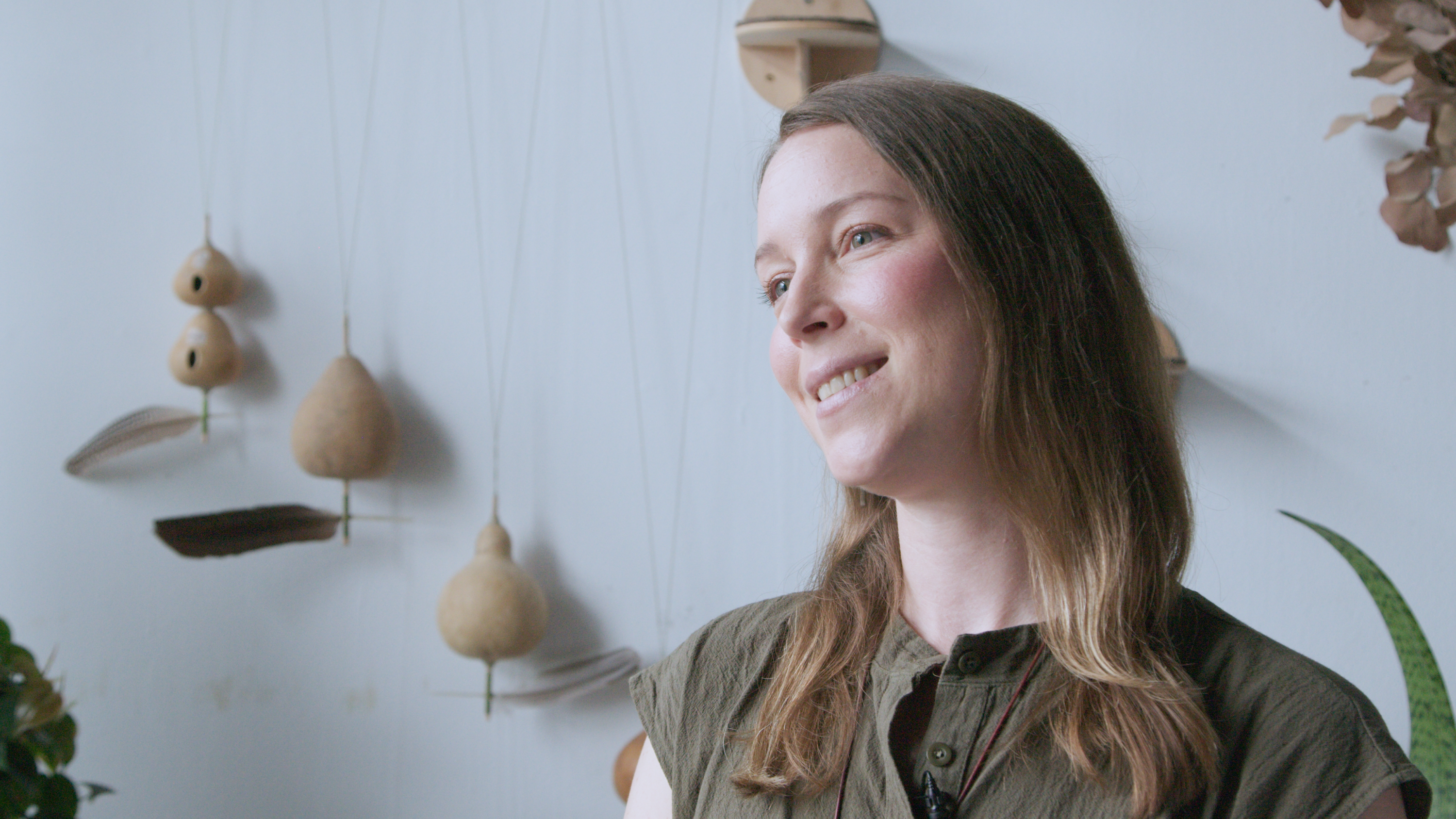
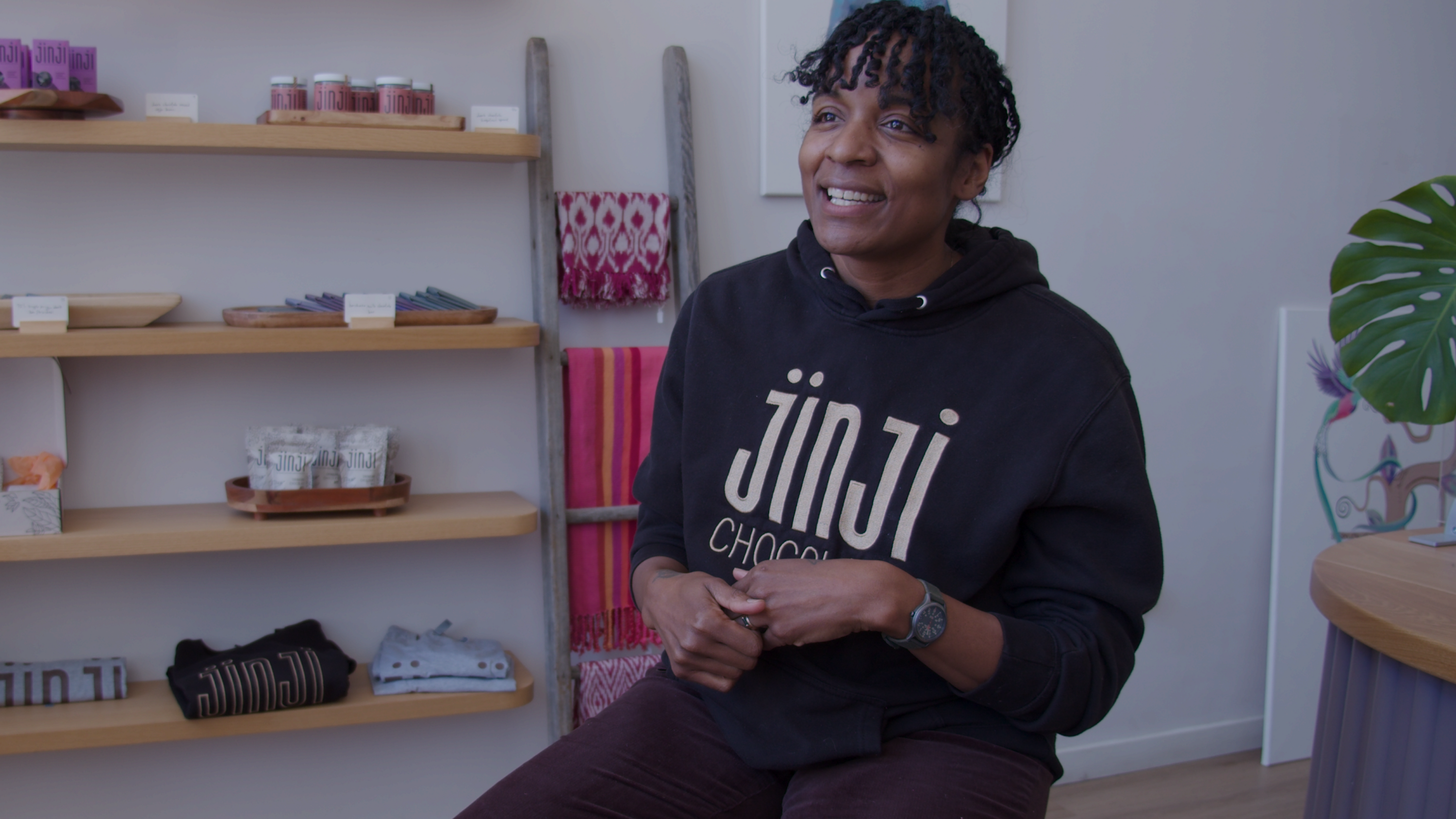
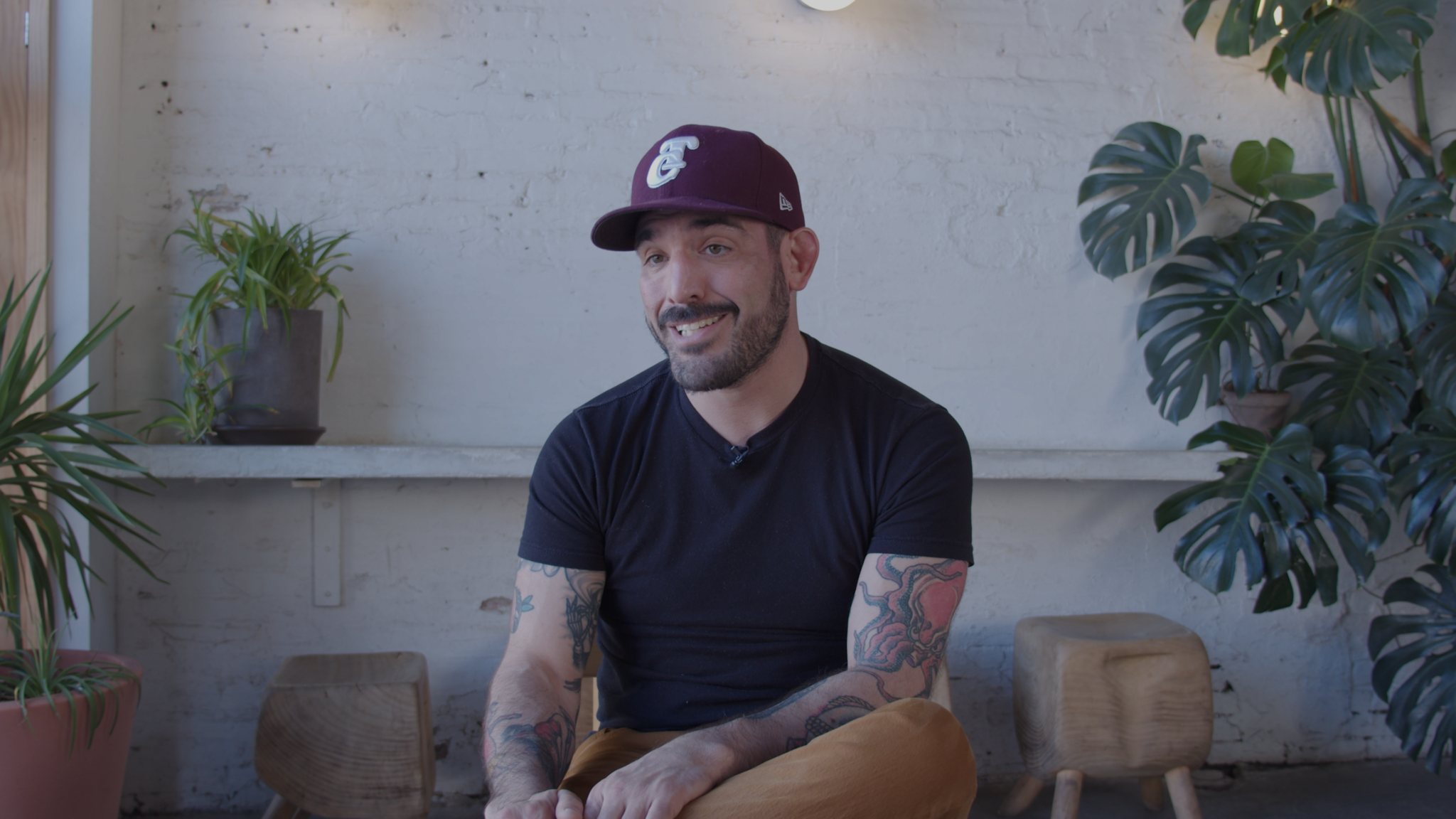
“Showcasing the vibrancy of diverse Latin American cultures is the core of this installation. Including the perspectives of people who are carrying on ancient traditions today encourages conversations about them and highlights the enduring legacy of ancient practices in contemporary times,” said Theresa Sotto, Ruth R. Marder Director of Learning and Community Engagement. “And community involvement wasn’t limited to just in-gallery videos: The content and presentation of the installation was also informed by community advisors and focus groups who provided vital input that centered Latino/a/e and Indigenous perspectives.”
The community members who shared their perspectives are also linked to the exhibition in another way: through that singular life force, which threads together all the elements of Latin American Art / Arte Latinoamericano. That shared living spirit encompasses more than just the art on view; it also expands out to join the artists, past and present, who created the artworks and the visitors who come to see those works, creating a continuum that links people, plants, animals, and minerals—and artworks—together across space and time.
Thanks to Our Partners
Major support for this installation and select accompanying programs is provided by The John G. Bourne Fund for the Exhibition of the Arts of the Ancient Americas. This installation and select accompanying programs are also generously supported by Matt Polk and Amy Gould, The Terra Foundation for American Art, The Hilde Voss Eliasberg Fund for Exhibitions, the Estate of Rosalee and Richard Davison, contributors to the Gary Vikan Exhibition Endowment Fund, Judy and Scott Phares, The Walters Women’s Committee Legacy Endowment, and Supporters of the Walters Art Museum; with additional support from The Francis D. Murnaghan, Jr., Fund for Scholarly Publications and the Sara Finnegan Lycett Publishing Endowment.
This installation and select accompanying programs have been made possible in part by a major grant from the Institute of Museum and Library Services (MA-255902- OMS-24). The views, findings, conclusions, or recommendations expressed in this installation do not necessarily represent those of the Institute of Museum and Library Services or other funders.
Presenting Sponsor PNC Bank.